Dividing by 2
If the number ends in a even digit, it is divisible by 2
Example:
22 is divisible by 2
15421464605613404646518 is divisible by 2
Dividing by 3
Add up the digits: if the sum is divisible by three, then the number is as well. Examples:
111111: the digits add to 6 so the whole number is divisible by three.
87687687. The digits add up to 57, and 5 plus seven is 12, so the original number is divisible by 3
Dividing by 4
Look at the last two digits. If the number formed by its last two digits is divisible by 4, the original number is as well.
Examples:
100 is divisible by 4.
1732782989264864826421834612 is divisible by four also, because 12 is divisible by four.
Dividing by 5
If the last digit is a five or a zero, then the number is divisible by 5.
Examples:
125 is divisible by 5
175983421545613651120 is divisible by 5
Dividing by 6
Check 3 and 2. If the number is divisible by both 3 and 2, it is divisible by 6 as well.
Dividing by 7
Use the 3 coefficients (1 , 2 , 3). Multiply the first number starting from the ones place by 1, then the second from the right by 3, the third by 2, the fourth by -1, the fifth by -3, the sixth by -2, and the seventh by 1, and so forth.
Example: 348967129356876.
6 + 21 + 16 - 6 - 15 - 6 + 9 + 6 + 2 - 7 - 18 - 18 + 8 + 12 + 6 = 16
means the number is not multiple of seven.
If the number was 348967129356874, then the number is a multiple of seven
because instead of 16, we would find 14 as a result, which is a multiple of 7.
So the pattern is as follows: for a number onmlkjihgfedcba, calculate
a + 3b + 2c - d - 3e - 2f + g + 3h + 2i - j - 3k - 2l + m + 3n + 2o.
Example: 348967129356874.
Below each digit let me write its respective figure.
3 4 8 9 6 7 1 2 9 3 5 6 8 7 6
2 3 1 -2 -3 -1 2 3 1 -2 -3 -1 2 3 1
(3×2) + (4×3) + (8×1) + (9×-2) + (6×-3) + (7×-1) +
(1×2) + (2×3) + (9×1) + (3×-2) + (5×-3) + (6×-1) +
(8×2) + (7×3) + (6×1) = 16 -- not a multiple of 7.
Dividing by 8
Check the last three digits. Since 1000 is divisible by 8, if the last three digits of a number are divisible by 8, then so is the whole number.
Example: 33333888 is divisible by 8; 33333886 isn't.
Dividing by 9
Add the digits. If that sum is divisible by nine, then the original number is as well.
Dividing by 10
If the number ends in 0, it is divisible by 10.
Dividing by 11
Let's look at 352, which is divisible by 11; the answer is 32. 3+2 is 5; another way to say this is that 35 -2 is 33.
Now look at 3531, which is also divisible by 11. It is not a coincidence that 353-1 is 352 and 11 × 321 is 3531.
Here is a generalization of this system. Let's look at the number 94186565.
First we want to find whether it is divisible by 11, but on the way we are going to save the numbers that we use: in every step we will subtract the last digit from the other digits, then save the subtracted amount in order. Start with
9418656 - 5 = 9418651 SAVE 5
Then 941865 - 1 = 941864 SAVE 1
Then 94186 - 4 = 94182 SAVE 4
Then 9418 - 2 = 9416 SAVE 2
Then 941 - 6 = 935 SAVE 6
Then 93 - 5 = 88 SAVE 5
Then 8 - 8 = 0 SAVE 8
Now write the numbers we saved in reverse order, and we have 8562415, which multiplied by 11 is 94186565.
Dividing by 12
Check for divisibility by 3 and 4.
Dividing by 13
Delete the last digit from the given number. Then subtract nine times the deleted digit from the remaining number. If what is left is divisible by 13, then so is the original number.
Friday, March 31, 2006

Saturday, March 18, 2006

Friday, March 17, 2006
Qualifying king - Schumacher or Senna?
Michael Schumacher's statistical dominance of Formula One racing is hardly news. By pretty much any objective standard you care to employ, he's already proved himself the most successful driver the sport has ever produced. But after taking P1 on the grid in Bahrain, he's now just one away from clinching the last of the major statistical records to have eluded him so far - that of the late Ayrton Senna's 65 pole positions.
Not that the seven-times world champion needs to break this final record to prove himself, of course. He's already taken 84 victories from 231 race starts. By contrast, the next most successful driver, Alain Prost, managed ‘just’ 51 wins from 199 races. Schumacher has taken more fastest laps (69), enjoyed more visits to the podium (143), scored more championship points (1256), led for more laps (4769) and led for more distance (22,469 kilometres) than any other driver in the history of the sport.
Despite all of the above, many will regard this final record - and the relative time it has taken Schumacher to reach it - as clear evidence that this is one area where he can't match the mercurial Senna. The Brazilian racked up his 65 poles in the 161 races that preceded his tragic death at Imola in 1994. Schumacher has needed almost half as many races again to reach the same mark.
Not only is that a considerably better ‘strike rate’, Senna taking pole on average every 2.5 races during his career, versus one pole for every 3.5 race starts for Schumacher - but the Brazilian was also empirically better able to ‘over-qualify’ relatively poor cars. In his first season with a front-ranking team, driving for Lotus in 1985, he managed to score seven poles, although the car's disastrous reliability only allowed him to turn one of those into a victory. The following year he bettered that with no fewer than nine pole positions for Lotus, although he emerged victorious at the end of only two of those races.
And in 1988, by now driving for McLaren, Senna put in what was possibly the greatest ever qualifying lap - taking P1 at the tight and twisty Monaco circuit with a time 1.4 seconds faster than the second-placed man - Alain Prost, who was driving an identical car. Gerhard Berger's third placed Ferrari was 2.7 seconds down on him. It was the most dominant qualifying performance in the recent history of the sport - and Senna later confessed that he had felt himself to be having a strange, out-of-body experience while he was doing it.
Schumacher has long claimed to be unconcerned with the statistical records that he is breaking - and he's long since proved himself the most successful Formula One driver of all time. But when it comes to qualifying, the black art of extracting the absolute maximum from a car over a single flying lap, many will argue that - 66 poles or not - it's still the one place he will have to defer to Senna.
Not that the seven-times world champion needs to break this final record to prove himself, of course. He's already taken 84 victories from 231 race starts. By contrast, the next most successful driver, Alain Prost, managed ‘just’ 51 wins from 199 races. Schumacher has taken more fastest laps (69), enjoyed more visits to the podium (143), scored more championship points (1256), led for more laps (4769) and led for more distance (22,469 kilometres) than any other driver in the history of the sport.
Despite all of the above, many will regard this final record - and the relative time it has taken Schumacher to reach it - as clear evidence that this is one area where he can't match the mercurial Senna. The Brazilian racked up his 65 poles in the 161 races that preceded his tragic death at Imola in 1994. Schumacher has needed almost half as many races again to reach the same mark.
Not only is that a considerably better ‘strike rate’, Senna taking pole on average every 2.5 races during his career, versus one pole for every 3.5 race starts for Schumacher - but the Brazilian was also empirically better able to ‘over-qualify’ relatively poor cars. In his first season with a front-ranking team, driving for Lotus in 1985, he managed to score seven poles, although the car's disastrous reliability only allowed him to turn one of those into a victory. The following year he bettered that with no fewer than nine pole positions for Lotus, although he emerged victorious at the end of only two of those races.
And in 1988, by now driving for McLaren, Senna put in what was possibly the greatest ever qualifying lap - taking P1 at the tight and twisty Monaco circuit with a time 1.4 seconds faster than the second-placed man - Alain Prost, who was driving an identical car. Gerhard Berger's third placed Ferrari was 2.7 seconds down on him. It was the most dominant qualifying performance in the recent history of the sport - and Senna later confessed that he had felt himself to be having a strange, out-of-body experience while he was doing it.
Schumacher has long claimed to be unconcerned with the statistical records that he is breaking - and he's long since proved himself the most successful Formula One driver of all time. But when it comes to qualifying, the black art of extracting the absolute maximum from a car over a single flying lap, many will argue that - 66 poles or not - it's still the one place he will have to defer to Senna.
Wednesday, March 15, 2006
Six Sigma: An introduction
(mean - 3 sigma to mean + 3 sigma = entire Bell curve)
Six Sigma at many organizations simply means a measure of quality that strives for near perfection. Six Sigma is a disciplined, data-driven approach and methodology for eliminating defects (driving towards six standard deviations between the mean and the nearest specification limit) in any process -- from manufacturing to transactional and from product to service.
The statistical representation of Six Sigma describes quantitatively how a process is performing. To achieve Six Sigma, a process must not produce more than 3.4 defects per million opportunities. A Six Sigma defect is defined as anything outside of customer specifications. A Six Sigma opportunity is then the total quantity of chances for a defect. Process sigma can easily be calculated using a Six Sigma calculator.
The fundamental objective of the Six Sigma methodology is the implementation of a measurement-based strategy that focuses on process improvement and variation reduction through the application of Six Sigma improvement projects. This is accomplished through the use of two Six Sigma sub-methodologies: DMAIC and DMADV. The Six Sigma DMAIC process (define, measure, analyze, improve, control) is an improvement system for existing processes falling below specification and looking for incremental improvement. The Six Sigma DMADV process (define, measure, analyze, design, verify) is an improvement system used to develop new processes or products at Six Sigma quality levels. It can also be employed if a current process requires more than just incremental improvement. Both Six Sigma processes are executed by Six Sigma Green Belts and Six Sigma Black Belts, and are overseen by Six Sigma Master Black Belts.
According to the Six Sigma Academy, Black Belts save companies approximately $230,000 per project and can complete four to 6 projects per year. General Electric, one of the most successful companies implementing Six Sigma, has estimated benefits on the order of $10 billion during the first five years of implementation. GE first began Six Sigma in 1995 after Motorola and Allied Signal blazed the Six Sigma trail. Since then, thousands of companies around the world have discovered the far reaching benefits of Six Sigma.
Six Sigma at many organizations simply means a measure of quality that strives for near perfection. Six Sigma is a disciplined, data-driven approach and methodology for eliminating defects (driving towards six standard deviations between the mean and the nearest specification limit) in any process -- from manufacturing to transactional and from product to service.
The statistical representation of Six Sigma describes quantitatively how a process is performing. To achieve Six Sigma, a process must not produce more than 3.4 defects per million opportunities. A Six Sigma defect is defined as anything outside of customer specifications. A Six Sigma opportunity is then the total quantity of chances for a defect. Process sigma can easily be calculated using a Six Sigma calculator.
The fundamental objective of the Six Sigma methodology is the implementation of a measurement-based strategy that focuses on process improvement and variation reduction through the application of Six Sigma improvement projects. This is accomplished through the use of two Six Sigma sub-methodologies: DMAIC and DMADV. The Six Sigma DMAIC process (define, measure, analyze, improve, control) is an improvement system for existing processes falling below specification and looking for incremental improvement. The Six Sigma DMADV process (define, measure, analyze, design, verify) is an improvement system used to develop new processes or products at Six Sigma quality levels. It can also be employed if a current process requires more than just incremental improvement. Both Six Sigma processes are executed by Six Sigma Green Belts and Six Sigma Black Belts, and are overseen by Six Sigma Master Black Belts.
According to the Six Sigma Academy, Black Belts save companies approximately $230,000 per project and can complete four to 6 projects per year. General Electric, one of the most successful companies implementing Six Sigma, has estimated benefits on the order of $10 billion during the first five years of implementation. GE first began Six Sigma in 1995 after Motorola and Allied Signal blazed the Six Sigma trail. Since then, thousands of companies around the world have discovered the far reaching benefits of Six Sigma.
Sunday, March 12, 2006
SA: Conquering Heroes!
South Africa win the greatest match of all
March 12, 2006
49.5 overs South Africa 438 for 9 (Gibbs 175, Smith 90, Boucher 50*) beat Australia 434 for 4 (Ponting 164, Hussey 81, Katich 79) by one wicket
Seven years ago, in the semi-final of the 1999 World Cup, South Africa and Australia contested what has widely come to be regarded as the definitive one-day international. A total of 426 runs in two innings, twenty wickets in the day and world-class performances across the board - a match that built to a pulsating finale in which South Africa threw away their place in the World Cup final with what also came to be regarded as the definitive one-day choke.
Today, however, South Africa can be called chokers no longer, after burying the ghosts of 1999 with victory in a match even more extraordinary and nail-shredding than its illustrious forebear. Never mind 426 runs in a day, Australia had just posted a world-record 434 for 4 in a single innings - the first 400-plus total in the history of the game - with Ricky Ponting leading the line with an innings of cultured slogging that realised 164 runs of the highest class from just 105 balls. And yet they still lost - by one wicket, with one ball to spare, and with the Wanderers stadium reverting to the sort of Bullring atmosphere on which it forged its intimidating reputation.
At the halfway mark of the day, South Africa had been reduced to a near laughing stock. Ponting had been the kingpin as he reprised his World Cup-winning innings on this very ground in 2003, but every one of Australia's batsmen had taken their pound of flesh as well. Adam Gilchrist lit the blue touchpaper with an open-shouldered onslaught that realised 55 runs from 44 balls; Simon Katich provided a sheet-anchor with a difference as he creamed nine fours and a six in a 90-ball 79, and Mike Hussey - in theory Ponting's second fiddle in their 158-run stand for the third wicket - hurtled to a 51-ball 81. Australia's dominance seemed so complete that Andrew Symonds, the most notorious one-day wrecker in their ranks, was not even called upon until the scoreboard read a somewhat surreal 374 for 3.
Unsurprisingly, South Africa's bowlers took a universal pounding. Jacques Kallis disappeared for 70 runs in six overs and as the innings reached its crescendo, a flustered Roger Telemachus conceded 19 runs from four consecutive no-balls. The team had squandered a 2-0 series lead and were staring at a 3-2 defeat, and not for the first time this year, Graeme Smith's penchant for speaking his mind was looking like backfiring. With the Test series getting underway in four days' time, the need for a performance of pride had never been more urgent.
And so Smith took it upon himself to deliver, responding to his team's indignity with a brutal innings laced with fury. He made light of the early loss of Boeta Dippenaar, whose anchorman approach would not have been suited to the chase at any rate, and instead found the perfect ally in his former opening partner, Herschelle Gibbs. On a pitch that might have been sent from the Gods, the pair launched South Africa's response with a scathing stand of 187 from 121 balls, to send the first frissons of anxiety through the Australian dressing-room.
Smith made 90 from just 55 balls, and seemed set to trump Ponting's 71-ball century when he swatted the spinner, Michael Clarke, to Mike Hussey on the midwicket boundary. But Hussey's celebrations were manic and betrayed the creeping sense of foreboding that had taken hold of Australia's players. Just as South Africa had suffered for the absence of Shaun Pollock, so too was Glenn McGrath's constricting influence being missed. His understudies were simply not up to the task, with Mick Lewis earning an unwanted place in history as his ten overs were spanked for 113 runs - the most expensive analysis in any form of one-day international cricket.
Now it was Gibbs who took centre stage. The man who, memorably, dropped the World Cup at Headingley in that 1999 campaign has redeemed himself a hundred times over in the intervening years. But this was to be his crowning glory. With AB de Villiers providing a sparky sidekick, Gibbs carved great chunks out of the asking-rate, bringing up his century from 79 balls and rattling along so briskly that, by the 25-over mark, South Africa had 229 for 2 on the board, and needed a mere 206 to win. .
Only one contest could compare - the extraordinary C&G Trophy contest between Surrey and Glamorgan in 2002, when Alistair Brown scored 268 out of a total of 438 for 5, only for Glamorgan to track his side all the way with a reply of 429. In both instances, the sheer impossibility of the task galvanised the batting and turned the fielders' legs to jelly, and with Gibbs on 130, Nathan Bracken at mid-off dropped a sitter off a Lewis full-toss, and could only contemplate his navel as the Bullring roared its approval.
It was undeniably the decisive moment of the match. Bracken finished with a creditable 5 for 67, but this faux pas was written all across his features at the post-match presentations. Cashing in superbly, Gibbs hurtled to his 150 from exactly 100 balls, bringing up the landmark with his fifth six of the innings and the 21st of a bedlamic contest. He had reached a glorious 175 from 111 when Lee held onto a scuffed drive at mid-off. The stadium stood in acclaim, but with 136 runs still required and their main source of momentum gone, South Africa had plenty still to do.
Kallis and Mark Boucher regrouped with a steady partnership of 28 in six overs, but when the big-hitting Justin Kemp went cheaply, it took a blistering intervention from Johan van der Wath to reignite the chase. He drilled Lewis over long-off for two sixes in an over then added a six and a four in Bracken's eighth, as the requirement dropped from a tricky 77 from 42 balls to a gettable 36 from 22. He perished as he had lived, holing out to extra cover, and Telemachus followed soon afterwards, but not before he had clubbed an invaluable 12 from six balls.
And so it all came down to the final over, just as it had done at Edgbaston all those years ago. Brett Lee had seven runs to defend, and South Africa had two wickets in hand. A blazed four from Andrew Hall seemed to have settled the issue, but in a moment reminiscent of Lance Klusener's famous aberration, he smeared the very next delivery into the hands of Clarke at mid-on. Two runs needed then, and the No. 11, Makhaya Ntini, on strike. Lee's best effort was deflected to third man to tie the scores, and it was left to Boucher - with visions of Edgbaston swirling through his head - to seal the deal with a lofted four over mid-on. The most breathtaking game in one-day history had come to a grandstand finish, and all that remained was for the participants to pinch themselves.
Searching for a reason
Okay, why did that happen? Nearly 900 runs in one day, that doesn't happen - ever. Not in Twenty20, not in club cricket, not even in my back garden against my eight-year-old brother. So my question is why? I really want to know because I was there.
The pitch was a flat, quick deck with a carpet for an outfield, but games have been played in these conditions before. There've been plenty of flat decks and plenty of shorter boundaries with worse bowlers and big hitters. It's at altitude, the air is thinner, the ball flies further. Yes, but it's not the first game to be played on the high veld, no single batsman has ever gone massive here, Tests tend to be won [or lost] not dominated by the bat and ODIs do produce big scores, but nothing like this. Maybe there was a fix - come to think of it, there was a chap outside on a mobile phone with what looked like 22 leather jackets ... but that's a hideous thought.
Actually, the Wanderers, one of South Africa's most picturesque grounds set in the rolling, tree-lined suburbs of Johannesburg, does have previous. And usually to Australia's advantage. Steve Waugh and Greg Blewett batted all day in a Test in 1996-97 [I was there for that as well] and Adam Gilchrist smashed the then-fastest Test double-hundred as an emotional retort to personal abuse from the crowd in 2001-02. They won the 2003 World Cup here with a then-mammoth 359. And there was the Twenty20 earlier in the tour where the Australians fell two runs short chasing 200. If that was a signal of things to come, no one spotted it.
The key factor, though, was the absence of two players, Glenn McGrath and Shaun Pollock. This was a like-for-like loss - both bowl maidens in their sleep, causing much of the crowd to doze, and set the tone and pace for a day's play. Without them, anything can happen - and it did.
The game was cricket anarchy. Rules were ignored, conventional wisdom flown against, high-risks equalled high reward in every situation. Every gamble paid off, every scooped slog fell into space, every shy at the stumps missed. As the pressure and the run rate mounted so did the ferocity of the South African onslaught. Bat first, win the toss and bury the game - that is exactly what the Australians did and although they protested there was no "job-done" mentality, when you've just smashed a world record that's stood for ten years, you don't expect it to get beaten in the next three hours. South Africa has experienced a lawless past - for one glorious afternoon, the country re-visited it.
What was it like to be there? I'm not sure. The whole game was a blur of batting and you couldn't pick out the detail. Every time the bowler ran in, the ball disappeared to the boundary, often for six. Every time you looked at the scoreboard you had a double-take, could there really be that many overs left? Is that really the run rate?
And this was for both teams. With each run scored by the home side, the crowd went mad. When Herschelle Gibbs struck one of his seven sixes, the crowd made so much noise you worried for the structure of the stands. When Mark Boucher struck the winning runs, they couldn't control themselves and for a brief period real anarchy took over as the crowd on the pitch out-numbered the yellow jackets chasing them.
But it wasn't always like this - the South African faithful had suffered several stages of mourning through the Australian innings as Ricky Ponting, Adam Gilchrist, Michael Hussey and Simon Katich made South Africa's best looked like school girls. First there was anger as Andrew Hall bowled badly, followed by disbelief as Ponting swept Jacques Kallis on one knee for six, then hope (Gilchrist out) then despair. The 400 was passed with three overs left to bowl. By the end of the Australian innings, the crowd was smiling - that is all you could do. The game was up, let's sit back and enjoy this immense display of hitting and witness how many records the Australians could break. Little did they know.
As with all sporting moments of brilliance there are failures and victims. In this particular game, they were collectively known as bowlers. Superiority of bat over ball was such that you felt a bit dirty, like watching a 7-6 thriller in football - amazing but only because both defences were rubbish. It didn't matter because the South Africans love the tacky excess of one-day cricket. It is for them what Test cricket is for England fans, so this was a day of nail-biting clichés, tense faces, unable-to-watch syndrome, the nerve-shredding Ashes emotions of "I am glad I was around to witness it but I never want to go through that again".
Similarly to the Ashes, this game was a culmination of on and off pitch drama that started before Christmas in Australia, came to a head in Durban on Friday where the visitors levelled the series with a one-wicket win, and exploded with unbearable tension on what surely is the greatest one-day game ever.
Cricket is heading in this direction, though, and however tempting it might be to say this game will never be matched, you'll be wrong. When Fred Trueman took his 300th Test wicket, they thought that'd never get beaten. Now 400 has been passed twice in the same game - 500 is next. I just hope I'm there to see it.
Ponting in awe of Gibbs
Ricky Ponting has praised Herschelle Gibbs's "amazing" batting that launched South Africa to a mind-blowing one-wicket victory after Australia set a world-record 434 for 4. Gibbs pummelled 175 from 111 balls in a sensational reply before Mark Boucher's unbeaten half-century sealed the win with a ball to spare in what is already being called the greatest one-day game in history.
"We had no defence mechanisms whatsoever against the way they were hitting the ball," Ponting told AAP. "Herschelle was out in the 32nd over for 175 - that's amazing batting. We obviously bowled very, very poorly, but they certainly played exceptionally well and deserved the win."
Ponting's batting was also special - his 164 came from only 105 balls - but he did not accept the joint Man-of-the-Match award, preferring to give it to Gibbs. "I don't know where that innings came from; I don't think I've played better," Gibbs said in The Guardian. "We were smashing the ball everywhere early on, but I looked up at the scoreboard and we still needed 350 to win. We couldn't have batted any quicker and the total still wasn't coming down."
Graeme Smith, who belted 90 off 55 balls, described their success as "a bit sick really". "The pitch was great but you can't sit down and plan to chase 434," he said. "We said it was a freaky game at the halfway point, so who knows. Our initial target was 185 in 25 overs but we got way past that. It's a massive night for all of us."
Ponting was angry at what has become a regular occurrence. "We can't defend totals," he said. "There was always a chance because we did it, but there is no way they should have scored that many runs." However, he told AAP it was "just an amazing day". "You just can't fathom the sort of batting that has taken place today," he said.
It all happened at The Wanderers
South Africa's 438 for 9 is the highest total in ODIs beating the previous best by, well, a few hours. In fact, the last 12 months have seen a couple of astonishing team totals close to the 400 mark, like England's 391 for 4 against Bangladesh and New Zealand's 397 for 5 against Zimbabwe. Click here for a full list of highest team scores. This also equals the highest total in List-A games (inclusive of domestic limited-overs games): Surrey had made 438 for 5 against Glamorgan at The Oval in 2002. Click here for the full list of highest team totals in List-A matches.
South Africa have broken the world record for the highest successful chase in ODIs. Australia now have the embarrassing record of being at the receiving end of the two highest successful chases in ODIs. The previous record was not too long ago - when they conceded 332 against New Zealand at Christchurch in December, another record-breaking match as the tables will indicate below.
A total of 872 runs were scored in this match, making it the highest match aggregate in ODIs, going past the previous highest of 693, made by India and Pakistan at Karachi in 2004. Click here for the full list of highest match aggregates.
Mick Lewis, who conceded a whopping 113 runs, has the most expensive bowling figures in a ten-over spell in ODIs. He went past Muttiah Muralitharan, who held the previous record not too long ago, in the second final of the VB Series against Australia. Murali went for 99 runs and certainly wouldn't mind settling for second place.
Australia have lost a bilateral ODI series for the first time since June 2002, when they lost a three-match series to Pakistan 1-2.
Herschelle Gibbs's 175 is the tenth-highest individual score in ODIs and the second-highest by a South African, after Gary Kirsten's 188 against UAE in the 1996 World Cup. Click here for the list of highest individual scores.
The blinding knocks by Ricky Ponting and Herschelle Gibbs rank among the three most explosive knocks by batsmen who have made 130 or more in an ODI innings. Sanath Jayasuriya's 134 off 69 balls against Pakistan at Singapore is on top, with a strike rate of 206.25. Gibbs is second with a strike rate of 157.65 (175 off 111 balls) and Ponting comes third with 156.19 (164 off 105 balls).
One can be pardoned for mistaking this to be a Twenty 20 match. Fans at the Wanderers could well have gone home with cricked necks, watching the number of hits sail over the ropes. As many as 87 fours and 26 sixes were hit in all, making it another world record. The tables below list out the top-five in each category.
Most sixes in a match Number Match At
26 South Africa v Australia Johannesburg, 2005-06
21 New Zealand v Australia Christchurch, 2005-06
21 Sri Lanka v Kenya Kandy, 1996
20 New Zealand v Australia Christchurch, 1999-00
20 Pakistan v Sri Lanka Nairobi, 1996-97
Most fours in a match Number Match At
87 South Africa v Australia Johannesburg, 2005-06
79 Pakistan v India Peshawar, 2005-06
73 Pakistan v India Lahore, 2005-06
66 England v Bangladesh Trent Bridge, 2005
65 New Zealand v Australia Christchurch, 2005-06
South Africa have won the greatest one-day international in the history of the game.
Andrew Hall seem to have the match in the bag when he pulled Brett Lee for four through the vacant midwicket region but, with two runs needed from four balls and two wickets in the bag, he spooned his very next delivery to Michael Clarke at mid-on. That meant that it would be the No. 11, Makhaya Ntini, on strike to face the decisive deliveries.
His first delivery was clipped down to third man for a single, which left the scores level and Mark Boucher on strike. He made no mistake.
48.2 overs South Africa 423 for 8 (Boucher 43*) need another 12 runs to beat Australia 434 for 4 (Ponting 164, Hussey 81, Katich 79)
Mick Lewis became the most expensive bowler in the history of one-day cricket, as his 10 overs disappeared for 113 runs, and suddenly South Africa needed 13 runs from 12 balls, and the match was more or less in the bag. Lewis's final over was cracked for four, two, one, four, two, four, as Mark Boucher and Roger Telemachus carried their side to the brink of the most glorious win in history. But when Telemachus spooned an attempted drive and was brilliantly caught by a sprawling Mike Hussey at long-off, a final twist was on the cards.
46.3 overs South Africa 399 for 7 (Boucher 31*, Telemachus 0*) need another 36 runs to beat Australia 434 for 4 (Ponting 164, Hussey 81, Katich 79)
When Justin Kemp steered Nathan Bracken to backward point to be caught for 13, South Africa were 355 for 6 and it seemed their heroic challenge was beginning to fade. Instead, Johan van der Wath strode out to the middle to transform the equation once again with another wave of blistering hitting.
van der Wath belted Mick Lewis over long-off for two sixes in an over then added a six and a four in Nathan Bracken's eighth, as the requirement dropped from a tricky 77 from 42 balls to a gettable 36 from 22. But then van der Wath holed out to extra cover, and the scales tilted again.
40 overs South Africa 342 for 5 (Boucher 10*, Kemp 14*) need another 93 runs to beat Australia 434 for 4 (Ponting 164, Hussey 81, Katich 79)
Jacques Kallis fell for 20 to a smart return catch from Andrew Symonds, as the Wanderers run-fest hurtled towards a thrilling conclusion. With ten overs remaining, South Africa needed 93 runs to win with five wickets still standing, and the crucial pair of Mark Boucher and Justin Kemp at the crease.
31.5 overs South Africa 299 for 4 (Gibbs 175, Kallis 1*) need another 136 runs to beat Australia 434 for 4 (Ponting 164, Hussey 81, Katich 79)
Herschelle Gibbs's joyride came to an end on 175 from 111 balls, as Australia saw a glimmer of salvation amid the wreckage of their bowling performance. Having just smacked the sixth and seventh sixes of his monumental performance, Gibbs got underneath his next attacking stroke against Andrew Symonds, and chipped a simple chance to Brett Lee at long-off.
Australia were cockahoop and little wonder, but with batsmen of the quality of Jacques Kallis and Mark Boucher at the crease, the chase was still very much on.
30 overs South Africa 279 for 2 (Gibbs 156*, de Villiers 14*) need another 156 runs to beat Australia 434 for 4 (Ponting 164, Hussey 81, Katich 79)
Herschelle Gibbs hurtled to 150 not out from just 100 balls, and brought up the landmark with his fifth six of the innings and the 21st of a bedlamic contest, as South Africa continued to close in on the most remarkable run-chase in the history of one-day cricket.
Needing the small matter of 435 for victory, Gibbs kept the flows coming at a torrent, with Mick Lewis taking the brunt of his onslaught, with 72 runs coming from his seven overs. Brett Lee returned to the attack as Ponting played the last of his three Powerplays and for a moment Australia seemed to be regaining some control, but then AB de Villiers slotted him over the top for a one-bounce four, and the momentum had been maintained.
de Villiers eventually fell just after the drinks break, caught on the cow-corner boundary as he heaved Nathan Bracken into the deep. But Gibbs was still there, and as Jacques Kallis came out to join him, South Africa were still in the box seat.
27 overs South Africa 247 for 2 (Gibbs 131*, de Villiers 7*) need another 188 runs to beat Australia 434 for 4 (Ponting 164, Hussey 81, Katich 79)
Graeme Smith produced an innings laced with fury and Herschelle Gibbs blazed a 79-ball century to give their side a fighting chance of pulling off the most extraordinary run-chase in one-day history. By the halfway mark of the innings, South Africa had rattled along to 229 for 2, and needed a mere 206 to win with eight wickets in hand. Given everything that had gone before, few doubted they could achieve it either.
Only one contest could compare - the extraordinary C&G Trophy contest between Surrey and Glamorgan in 2002, when Alistair Brown scored 268 out of a total of 438 for 5, only for Glamorgan to track his side all the way with a reply of 429. Just as South Africa had discovered in the absence of Shaun Pollock, Australia badly missed the accuracy and reputation of Glenn McGrath.
In McGrath's absence, the likes of Mick Lewis and Stuart Clark were proving to be mere cannon fodder. Smith made a brilliant 90 from 55 balls before holing out to deep midwicket, but Gibbs and the combative AB de Villiers were still going strong - aided by some increasingly nervy Australian fielders. On 130, Gibbs had a massive let-off when Nathan Bracken at mid-off dropped a lobbed drive off a Lewis full-toss, and could only contemplate his navel as the Bullring roared its approval. Something remarkable was afoot.
15 overs South Africa 120 for 1 (Smith 52*, Gibbs 53*) need another 315 runs to beat Australia 434 for 4 (Ponting 164, Hussey 81, Katich 79)
Graeme Smith and Herschelle Gibbs played their shots to keep the decisive fifth one-day international at the Wanderers alive. Even though South Africa needed the small matter of 435 to win, the pair had added an unbeaten century partnership in double-quick time. After 15 overs they were well up with the required run-rate of almost nine an over, with Smith in particularly bullish form, on 52 from 36 balls.
South Africa's response got off to the worst possible start when Boeta Dippenaar - a centurion in Friday's match at Durban - played on to Nathan Bracken's second delivery and was bowled for 1. Even so, Dippenaar is not one of nature's strokeplayers, and his early departure allowed Smith and Gibbs to resume their prolific partnership.
With runs flowing freely on a brisk outfield and against an attack lacking the steadying services of Glenn McGrath, Brett Lee was cracked for 41 runs in his first five overs and the support cast of Stuart Clark and Mick Lewis leaked runs as well. Ponting opted not to play his third and final Powerplay, and instead brought on the spin of Andrew Symonds, in a bid to slow the scoring rate.
50 overs Australia 434 for 4 (Ponting 164, Hussey 81, Katich 79) against South Africa
Ricky Ponting produced one of the most sensational one-day innings of all time as Australia powered to a world-record total of 434 for 4 - the first 400-plus score in the game's history. In a display of cultured slogging that first broke his opponents' resolve then scattered their dignity to the highveld, Ponting creamed 164 sublime runs from 105 balls, with 13 fours and an astonishing nine sixes. It was the finest exhibition of clean-hitting that the Wanderers crowd had witnessed ... since Ponting's last performance on this ground, in the World Cup final in 2003, when he belted 140 not out against India to secure Australia's defence of the title.
By the time Ponting was finally plucked on the cover boundary by a leaping Boeta Dippenaar (a foot either side and he would instead have registered his tenth and most spectacular six of the innings), South Africa had been reduced to a pale imitation of a cricket team. Andrew Symonds - not a bad man to bring out to bat at 374 for 3 - and the promoted Brett Lee helped themselves to 27 runs from the final 14 balls of the innings, and Graeme Smith was left wondering how the series could have gone so wrong.
Smith will need little reminding that his team had led this series 2-0 after two matches, with Australia crumbling for just 93 in the second game at Cape Town. But now, with the Test series getting underway in just four days' time, Ponting and pals had served a stark reminder of where the balance of power really lies. A day that began with Shane Warne fuelling the war of words between the two camps culminated with the sight of Roger Telemachus losing the plot so spectacularly that, just prior to his fortuitous dismissal of Ponting, he managed to serve up four consecutive no-balls that were smeared for a total of 19 runs.
South Africa's bowling figures were a universal horror story. Telemachus went for 87 in his ten overs, Makhaya Ntini, Andrew Hall and Johan van der Wath fared little better, while Jacques Kallis - whom Ponting carted for consecutive leg-side sixes to bring up his fifty and open the floodgates - was clattered for 70 runs in just six overs. And, in one of the most comprehensive team batting performances of all time, each of the four Australians to be dismissed racked up at least a half-century in their time at the crease. Mike Hussey, Ponting's supposed sidekick during their 158-run stand for the third wicket, contributed the small matter of 81 from 51 balls, with nine fours and three sixes.
In theory, this innings ought to have been a good contest between bat and ball. With a hint of moisture in the surface and good bounce and carry being generated for South Africa's pace attack, Australia's openers had some early moments of discomfort. But far from being cowed by the occasional ball that beat the outside edge, Simon Katich and Adam Gilchrist embarked on a thrilling counterattack. With the metronomic Shaun Pollock still absent from South Africa's attack, the remaining seamers lacked the wicket-to-wicket discipline to cope with Australia's intent.
Gilchrist, as ever, was at the forefront of the assault. He survived a tough chance on just 8, when Herschelle Gibbs parried a scorching one-handed leap to his left at point, and thereafter he was in the mood to open his shoulders. Ntini was punished for every error in line with pushes down the ground for four and whips off the legs through midwicket, and Gilchrist's half-century had come from just 35 balls when Hall at mid-on took an incredible one-handed tumbling catch, as he swooped low to his left to intercept a fierce pull shot.
Such brilliance ought to have been an uplifting moment for South Africa, but at 97 for 1 in the 16th over, Gilchrist had done the damage and Ponting was in the mood to cash in. At first he was measured in his approach, restricting himself to clipped boundaries off his legs as Katich, hitherto the more silent partner, took up the cudgels by hoisting van der Wath for a vast six over wide mid-on. He had made 79 from 90 balls before Ntini got one to climb on him and Telemachus at third man completed a simple lobbed catch.
At the halfway mark of the innings, Australia were already cruising towards a vast total, but when Hussey started climbing into Kallis, clubbing him for four, six, four to bring up the fifty partnership, South Africa truly had no place to hide. The final ten overs of the innings realised 133 runs, with sixes being smacked almost at will - seven in consecutive overs, including - appropriately enough - Symonds' heave down the ground off Telemachus to bring up the 400.
It was a performance of awesome power and intent, and it came almost ten years to the day since Sri Lanka posted 398 against Kenya on their way to the 1996 World Cup. Ponting had that World Cup feeling himself today, as Johannesburg was treated to a re-run of that 2003 tour de force that few at the time imagined could ever be bettered.
March 12, 2006
49.5 overs South Africa 438 for 9 (Gibbs 175, Smith 90, Boucher 50*) beat Australia 434 for 4 (Ponting 164, Hussey 81, Katich 79) by one wicket
Seven years ago, in the semi-final of the 1999 World Cup, South Africa and Australia contested what has widely come to be regarded as the definitive one-day international. A total of 426 runs in two innings, twenty wickets in the day and world-class performances across the board - a match that built to a pulsating finale in which South Africa threw away their place in the World Cup final with what also came to be regarded as the definitive one-day choke.
Today, however, South Africa can be called chokers no longer, after burying the ghosts of 1999 with victory in a match even more extraordinary and nail-shredding than its illustrious forebear. Never mind 426 runs in a day, Australia had just posted a world-record 434 for 4 in a single innings - the first 400-plus total in the history of the game - with Ricky Ponting leading the line with an innings of cultured slogging that realised 164 runs of the highest class from just 105 balls. And yet they still lost - by one wicket, with one ball to spare, and with the Wanderers stadium reverting to the sort of Bullring atmosphere on which it forged its intimidating reputation.
At the halfway mark of the day, South Africa had been reduced to a near laughing stock. Ponting had been the kingpin as he reprised his World Cup-winning innings on this very ground in 2003, but every one of Australia's batsmen had taken their pound of flesh as well. Adam Gilchrist lit the blue touchpaper with an open-shouldered onslaught that realised 55 runs from 44 balls; Simon Katich provided a sheet-anchor with a difference as he creamed nine fours and a six in a 90-ball 79, and Mike Hussey - in theory Ponting's second fiddle in their 158-run stand for the third wicket - hurtled to a 51-ball 81. Australia's dominance seemed so complete that Andrew Symonds, the most notorious one-day wrecker in their ranks, was not even called upon until the scoreboard read a somewhat surreal 374 for 3.
Unsurprisingly, South Africa's bowlers took a universal pounding. Jacques Kallis disappeared for 70 runs in six overs and as the innings reached its crescendo, a flustered Roger Telemachus conceded 19 runs from four consecutive no-balls. The team had squandered a 2-0 series lead and were staring at a 3-2 defeat, and not for the first time this year, Graeme Smith's penchant for speaking his mind was looking like backfiring. With the Test series getting underway in four days' time, the need for a performance of pride had never been more urgent.
And so Smith took it upon himself to deliver, responding to his team's indignity with a brutal innings laced with fury. He made light of the early loss of Boeta Dippenaar, whose anchorman approach would not have been suited to the chase at any rate, and instead found the perfect ally in his former opening partner, Herschelle Gibbs. On a pitch that might have been sent from the Gods, the pair launched South Africa's response with a scathing stand of 187 from 121 balls, to send the first frissons of anxiety through the Australian dressing-room.
Smith made 90 from just 55 balls, and seemed set to trump Ponting's 71-ball century when he swatted the spinner, Michael Clarke, to Mike Hussey on the midwicket boundary. But Hussey's celebrations were manic and betrayed the creeping sense of foreboding that had taken hold of Australia's players. Just as South Africa had suffered for the absence of Shaun Pollock, so too was Glenn McGrath's constricting influence being missed. His understudies were simply not up to the task, with Mick Lewis earning an unwanted place in history as his ten overs were spanked for 113 runs - the most expensive analysis in any form of one-day international cricket.
Now it was Gibbs who took centre stage. The man who, memorably, dropped the World Cup at Headingley in that 1999 campaign has redeemed himself a hundred times over in the intervening years. But this was to be his crowning glory. With AB de Villiers providing a sparky sidekick, Gibbs carved great chunks out of the asking-rate, bringing up his century from 79 balls and rattling along so briskly that, by the 25-over mark, South Africa had 229 for 2 on the board, and needed a mere 206 to win. .
Only one contest could compare - the extraordinary C&G Trophy contest between Surrey and Glamorgan in 2002, when Alistair Brown scored 268 out of a total of 438 for 5, only for Glamorgan to track his side all the way with a reply of 429. In both instances, the sheer impossibility of the task galvanised the batting and turned the fielders' legs to jelly, and with Gibbs on 130, Nathan Bracken at mid-off dropped a sitter off a Lewis full-toss, and could only contemplate his navel as the Bullring roared its approval.
It was undeniably the decisive moment of the match. Bracken finished with a creditable 5 for 67, but this faux pas was written all across his features at the post-match presentations. Cashing in superbly, Gibbs hurtled to his 150 from exactly 100 balls, bringing up the landmark with his fifth six of the innings and the 21st of a bedlamic contest. He had reached a glorious 175 from 111 when Lee held onto a scuffed drive at mid-off. The stadium stood in acclaim, but with 136 runs still required and their main source of momentum gone, South Africa had plenty still to do.
Kallis and Mark Boucher regrouped with a steady partnership of 28 in six overs, but when the big-hitting Justin Kemp went cheaply, it took a blistering intervention from Johan van der Wath to reignite the chase. He drilled Lewis over long-off for two sixes in an over then added a six and a four in Bracken's eighth, as the requirement dropped from a tricky 77 from 42 balls to a gettable 36 from 22. He perished as he had lived, holing out to extra cover, and Telemachus followed soon afterwards, but not before he had clubbed an invaluable 12 from six balls.
And so it all came down to the final over, just as it had done at Edgbaston all those years ago. Brett Lee had seven runs to defend, and South Africa had two wickets in hand. A blazed four from Andrew Hall seemed to have settled the issue, but in a moment reminiscent of Lance Klusener's famous aberration, he smeared the very next delivery into the hands of Clarke at mid-on. Two runs needed then, and the No. 11, Makhaya Ntini, on strike. Lee's best effort was deflected to third man to tie the scores, and it was left to Boucher - with visions of Edgbaston swirling through his head - to seal the deal with a lofted four over mid-on. The most breathtaking game in one-day history had come to a grandstand finish, and all that remained was for the participants to pinch themselves.
Searching for a reason
Okay, why did that happen? Nearly 900 runs in one day, that doesn't happen - ever. Not in Twenty20, not in club cricket, not even in my back garden against my eight-year-old brother. So my question is why? I really want to know because I was there.
The pitch was a flat, quick deck with a carpet for an outfield, but games have been played in these conditions before. There've been plenty of flat decks and plenty of shorter boundaries with worse bowlers and big hitters. It's at altitude, the air is thinner, the ball flies further. Yes, but it's not the first game to be played on the high veld, no single batsman has ever gone massive here, Tests tend to be won [or lost] not dominated by the bat and ODIs do produce big scores, but nothing like this. Maybe there was a fix - come to think of it, there was a chap outside on a mobile phone with what looked like 22 leather jackets ... but that's a hideous thought.
Actually, the Wanderers, one of South Africa's most picturesque grounds set in the rolling, tree-lined suburbs of Johannesburg, does have previous. And usually to Australia's advantage. Steve Waugh and Greg Blewett batted all day in a Test in 1996-97 [I was there for that as well] and Adam Gilchrist smashed the then-fastest Test double-hundred as an emotional retort to personal abuse from the crowd in 2001-02. They won the 2003 World Cup here with a then-mammoth 359. And there was the Twenty20 earlier in the tour where the Australians fell two runs short chasing 200. If that was a signal of things to come, no one spotted it.
The key factor, though, was the absence of two players, Glenn McGrath and Shaun Pollock. This was a like-for-like loss - both bowl maidens in their sleep, causing much of the crowd to doze, and set the tone and pace for a day's play. Without them, anything can happen - and it did.
The game was cricket anarchy. Rules were ignored, conventional wisdom flown against, high-risks equalled high reward in every situation. Every gamble paid off, every scooped slog fell into space, every shy at the stumps missed. As the pressure and the run rate mounted so did the ferocity of the South African onslaught. Bat first, win the toss and bury the game - that is exactly what the Australians did and although they protested there was no "job-done" mentality, when you've just smashed a world record that's stood for ten years, you don't expect it to get beaten in the next three hours. South Africa has experienced a lawless past - for one glorious afternoon, the country re-visited it.
What was it like to be there? I'm not sure. The whole game was a blur of batting and you couldn't pick out the detail. Every time the bowler ran in, the ball disappeared to the boundary, often for six. Every time you looked at the scoreboard you had a double-take, could there really be that many overs left? Is that really the run rate?
And this was for both teams. With each run scored by the home side, the crowd went mad. When Herschelle Gibbs struck one of his seven sixes, the crowd made so much noise you worried for the structure of the stands. When Mark Boucher struck the winning runs, they couldn't control themselves and for a brief period real anarchy took over as the crowd on the pitch out-numbered the yellow jackets chasing them.
But it wasn't always like this - the South African faithful had suffered several stages of mourning through the Australian innings as Ricky Ponting, Adam Gilchrist, Michael Hussey and Simon Katich made South Africa's best looked like school girls. First there was anger as Andrew Hall bowled badly, followed by disbelief as Ponting swept Jacques Kallis on one knee for six, then hope (Gilchrist out) then despair. The 400 was passed with three overs left to bowl. By the end of the Australian innings, the crowd was smiling - that is all you could do. The game was up, let's sit back and enjoy this immense display of hitting and witness how many records the Australians could break. Little did they know.
As with all sporting moments of brilliance there are failures and victims. In this particular game, they were collectively known as bowlers. Superiority of bat over ball was such that you felt a bit dirty, like watching a 7-6 thriller in football - amazing but only because both defences were rubbish. It didn't matter because the South Africans love the tacky excess of one-day cricket. It is for them what Test cricket is for England fans, so this was a day of nail-biting clichés, tense faces, unable-to-watch syndrome, the nerve-shredding Ashes emotions of "I am glad I was around to witness it but I never want to go through that again".
Similarly to the Ashes, this game was a culmination of on and off pitch drama that started before Christmas in Australia, came to a head in Durban on Friday where the visitors levelled the series with a one-wicket win, and exploded with unbearable tension on what surely is the greatest one-day game ever.
Cricket is heading in this direction, though, and however tempting it might be to say this game will never be matched, you'll be wrong. When Fred Trueman took his 300th Test wicket, they thought that'd never get beaten. Now 400 has been passed twice in the same game - 500 is next. I just hope I'm there to see it.
Ponting in awe of Gibbs
Ricky Ponting has praised Herschelle Gibbs's "amazing" batting that launched South Africa to a mind-blowing one-wicket victory after Australia set a world-record 434 for 4. Gibbs pummelled 175 from 111 balls in a sensational reply before Mark Boucher's unbeaten half-century sealed the win with a ball to spare in what is already being called the greatest one-day game in history.
"We had no defence mechanisms whatsoever against the way they were hitting the ball," Ponting told AAP. "Herschelle was out in the 32nd over for 175 - that's amazing batting. We obviously bowled very, very poorly, but they certainly played exceptionally well and deserved the win."
Ponting's batting was also special - his 164 came from only 105 balls - but he did not accept the joint Man-of-the-Match award, preferring to give it to Gibbs. "I don't know where that innings came from; I don't think I've played better," Gibbs said in The Guardian. "We were smashing the ball everywhere early on, but I looked up at the scoreboard and we still needed 350 to win. We couldn't have batted any quicker and the total still wasn't coming down."
Graeme Smith, who belted 90 off 55 balls, described their success as "a bit sick really". "The pitch was great but you can't sit down and plan to chase 434," he said. "We said it was a freaky game at the halfway point, so who knows. Our initial target was 185 in 25 overs but we got way past that. It's a massive night for all of us."
Ponting was angry at what has become a regular occurrence. "We can't defend totals," he said. "There was always a chance because we did it, but there is no way they should have scored that many runs." However, he told AAP it was "just an amazing day". "You just can't fathom the sort of batting that has taken place today," he said.
It all happened at The Wanderers
South Africa's 438 for 9 is the highest total in ODIs beating the previous best by, well, a few hours. In fact, the last 12 months have seen a couple of astonishing team totals close to the 400 mark, like England's 391 for 4 against Bangladesh and New Zealand's 397 for 5 against Zimbabwe. Click here for a full list of highest team scores. This also equals the highest total in List-A games (inclusive of domestic limited-overs games): Surrey had made 438 for 5 against Glamorgan at The Oval in 2002. Click here for the full list of highest team totals in List-A matches.
South Africa have broken the world record for the highest successful chase in ODIs. Australia now have the embarrassing record of being at the receiving end of the two highest successful chases in ODIs. The previous record was not too long ago - when they conceded 332 against New Zealand at Christchurch in December, another record-breaking match as the tables will indicate below.
A total of 872 runs were scored in this match, making it the highest match aggregate in ODIs, going past the previous highest of 693, made by India and Pakistan at Karachi in 2004. Click here for the full list of highest match aggregates.
Mick Lewis, who conceded a whopping 113 runs, has the most expensive bowling figures in a ten-over spell in ODIs. He went past Muttiah Muralitharan, who held the previous record not too long ago, in the second final of the VB Series against Australia. Murali went for 99 runs and certainly wouldn't mind settling for second place.
Australia have lost a bilateral ODI series for the first time since June 2002, when they lost a three-match series to Pakistan 1-2.
Herschelle Gibbs's 175 is the tenth-highest individual score in ODIs and the second-highest by a South African, after Gary Kirsten's 188 against UAE in the 1996 World Cup. Click here for the list of highest individual scores.
The blinding knocks by Ricky Ponting and Herschelle Gibbs rank among the three most explosive knocks by batsmen who have made 130 or more in an ODI innings. Sanath Jayasuriya's 134 off 69 balls against Pakistan at Singapore is on top, with a strike rate of 206.25. Gibbs is second with a strike rate of 157.65 (175 off 111 balls) and Ponting comes third with 156.19 (164 off 105 balls).
One can be pardoned for mistaking this to be a Twenty 20 match. Fans at the Wanderers could well have gone home with cricked necks, watching the number of hits sail over the ropes. As many as 87 fours and 26 sixes were hit in all, making it another world record. The tables below list out the top-five in each category.
Most sixes in a match Number Match At
26 South Africa v Australia Johannesburg, 2005-06
21 New Zealand v Australia Christchurch, 2005-06
21 Sri Lanka v Kenya Kandy, 1996
20 New Zealand v Australia Christchurch, 1999-00
20 Pakistan v Sri Lanka Nairobi, 1996-97
Most fours in a match Number Match At
87 South Africa v Australia Johannesburg, 2005-06
79 Pakistan v India Peshawar, 2005-06
73 Pakistan v India Lahore, 2005-06
66 England v Bangladesh Trent Bridge, 2005
65 New Zealand v Australia Christchurch, 2005-06
South Africa have won the greatest one-day international in the history of the game.
Andrew Hall seem to have the match in the bag when he pulled Brett Lee for four through the vacant midwicket region but, with two runs needed from four balls and two wickets in the bag, he spooned his very next delivery to Michael Clarke at mid-on. That meant that it would be the No. 11, Makhaya Ntini, on strike to face the decisive deliveries.
His first delivery was clipped down to third man for a single, which left the scores level and Mark Boucher on strike. He made no mistake.
48.2 overs South Africa 423 for 8 (Boucher 43*) need another 12 runs to beat Australia 434 for 4 (Ponting 164, Hussey 81, Katich 79)
Mick Lewis became the most expensive bowler in the history of one-day cricket, as his 10 overs disappeared for 113 runs, and suddenly South Africa needed 13 runs from 12 balls, and the match was more or less in the bag. Lewis's final over was cracked for four, two, one, four, two, four, as Mark Boucher and Roger Telemachus carried their side to the brink of the most glorious win in history. But when Telemachus spooned an attempted drive and was brilliantly caught by a sprawling Mike Hussey at long-off, a final twist was on the cards.
46.3 overs South Africa 399 for 7 (Boucher 31*, Telemachus 0*) need another 36 runs to beat Australia 434 for 4 (Ponting 164, Hussey 81, Katich 79)
When Justin Kemp steered Nathan Bracken to backward point to be caught for 13, South Africa were 355 for 6 and it seemed their heroic challenge was beginning to fade. Instead, Johan van der Wath strode out to the middle to transform the equation once again with another wave of blistering hitting.
van der Wath belted Mick Lewis over long-off for two sixes in an over then added a six and a four in Nathan Bracken's eighth, as the requirement dropped from a tricky 77 from 42 balls to a gettable 36 from 22. But then van der Wath holed out to extra cover, and the scales tilted again.
40 overs South Africa 342 for 5 (Boucher 10*, Kemp 14*) need another 93 runs to beat Australia 434 for 4 (Ponting 164, Hussey 81, Katich 79)
Jacques Kallis fell for 20 to a smart return catch from Andrew Symonds, as the Wanderers run-fest hurtled towards a thrilling conclusion. With ten overs remaining, South Africa needed 93 runs to win with five wickets still standing, and the crucial pair of Mark Boucher and Justin Kemp at the crease.
31.5 overs South Africa 299 for 4 (Gibbs 175, Kallis 1*) need another 136 runs to beat Australia 434 for 4 (Ponting 164, Hussey 81, Katich 79)
Herschelle Gibbs's joyride came to an end on 175 from 111 balls, as Australia saw a glimmer of salvation amid the wreckage of their bowling performance. Having just smacked the sixth and seventh sixes of his monumental performance, Gibbs got underneath his next attacking stroke against Andrew Symonds, and chipped a simple chance to Brett Lee at long-off.
Australia were cockahoop and little wonder, but with batsmen of the quality of Jacques Kallis and Mark Boucher at the crease, the chase was still very much on.
30 overs South Africa 279 for 2 (Gibbs 156*, de Villiers 14*) need another 156 runs to beat Australia 434 for 4 (Ponting 164, Hussey 81, Katich 79)
Herschelle Gibbs hurtled to 150 not out from just 100 balls, and brought up the landmark with his fifth six of the innings and the 21st of a bedlamic contest, as South Africa continued to close in on the most remarkable run-chase in the history of one-day cricket.
Needing the small matter of 435 for victory, Gibbs kept the flows coming at a torrent, with Mick Lewis taking the brunt of his onslaught, with 72 runs coming from his seven overs. Brett Lee returned to the attack as Ponting played the last of his three Powerplays and for a moment Australia seemed to be regaining some control, but then AB de Villiers slotted him over the top for a one-bounce four, and the momentum had been maintained.
de Villiers eventually fell just after the drinks break, caught on the cow-corner boundary as he heaved Nathan Bracken into the deep. But Gibbs was still there, and as Jacques Kallis came out to join him, South Africa were still in the box seat.
27 overs South Africa 247 for 2 (Gibbs 131*, de Villiers 7*) need another 188 runs to beat Australia 434 for 4 (Ponting 164, Hussey 81, Katich 79)
Graeme Smith produced an innings laced with fury and Herschelle Gibbs blazed a 79-ball century to give their side a fighting chance of pulling off the most extraordinary run-chase in one-day history. By the halfway mark of the innings, South Africa had rattled along to 229 for 2, and needed a mere 206 to win with eight wickets in hand. Given everything that had gone before, few doubted they could achieve it either.
Only one contest could compare - the extraordinary C&G Trophy contest between Surrey and Glamorgan in 2002, when Alistair Brown scored 268 out of a total of 438 for 5, only for Glamorgan to track his side all the way with a reply of 429. Just as South Africa had discovered in the absence of Shaun Pollock, Australia badly missed the accuracy and reputation of Glenn McGrath.
In McGrath's absence, the likes of Mick Lewis and Stuart Clark were proving to be mere cannon fodder. Smith made a brilliant 90 from 55 balls before holing out to deep midwicket, but Gibbs and the combative AB de Villiers were still going strong - aided by some increasingly nervy Australian fielders. On 130, Gibbs had a massive let-off when Nathan Bracken at mid-off dropped a lobbed drive off a Lewis full-toss, and could only contemplate his navel as the Bullring roared its approval. Something remarkable was afoot.
15 overs South Africa 120 for 1 (Smith 52*, Gibbs 53*) need another 315 runs to beat Australia 434 for 4 (Ponting 164, Hussey 81, Katich 79)
Graeme Smith and Herschelle Gibbs played their shots to keep the decisive fifth one-day international at the Wanderers alive. Even though South Africa needed the small matter of 435 to win, the pair had added an unbeaten century partnership in double-quick time. After 15 overs they were well up with the required run-rate of almost nine an over, with Smith in particularly bullish form, on 52 from 36 balls.
South Africa's response got off to the worst possible start when Boeta Dippenaar - a centurion in Friday's match at Durban - played on to Nathan Bracken's second delivery and was bowled for 1. Even so, Dippenaar is not one of nature's strokeplayers, and his early departure allowed Smith and Gibbs to resume their prolific partnership.
With runs flowing freely on a brisk outfield and against an attack lacking the steadying services of Glenn McGrath, Brett Lee was cracked for 41 runs in his first five overs and the support cast of Stuart Clark and Mick Lewis leaked runs as well. Ponting opted not to play his third and final Powerplay, and instead brought on the spin of Andrew Symonds, in a bid to slow the scoring rate.
50 overs Australia 434 for 4 (Ponting 164, Hussey 81, Katich 79) against South Africa
Ricky Ponting produced one of the most sensational one-day innings of all time as Australia powered to a world-record total of 434 for 4 - the first 400-plus score in the game's history. In a display of cultured slogging that first broke his opponents' resolve then scattered their dignity to the highveld, Ponting creamed 164 sublime runs from 105 balls, with 13 fours and an astonishing nine sixes. It was the finest exhibition of clean-hitting that the Wanderers crowd had witnessed ... since Ponting's last performance on this ground, in the World Cup final in 2003, when he belted 140 not out against India to secure Australia's defence of the title.
By the time Ponting was finally plucked on the cover boundary by a leaping Boeta Dippenaar (a foot either side and he would instead have registered his tenth and most spectacular six of the innings), South Africa had been reduced to a pale imitation of a cricket team. Andrew Symonds - not a bad man to bring out to bat at 374 for 3 - and the promoted Brett Lee helped themselves to 27 runs from the final 14 balls of the innings, and Graeme Smith was left wondering how the series could have gone so wrong.
Smith will need little reminding that his team had led this series 2-0 after two matches, with Australia crumbling for just 93 in the second game at Cape Town. But now, with the Test series getting underway in just four days' time, Ponting and pals had served a stark reminder of where the balance of power really lies. A day that began with Shane Warne fuelling the war of words between the two camps culminated with the sight of Roger Telemachus losing the plot so spectacularly that, just prior to his fortuitous dismissal of Ponting, he managed to serve up four consecutive no-balls that were smeared for a total of 19 runs.
South Africa's bowling figures were a universal horror story. Telemachus went for 87 in his ten overs, Makhaya Ntini, Andrew Hall and Johan van der Wath fared little better, while Jacques Kallis - whom Ponting carted for consecutive leg-side sixes to bring up his fifty and open the floodgates - was clattered for 70 runs in just six overs. And, in one of the most comprehensive team batting performances of all time, each of the four Australians to be dismissed racked up at least a half-century in their time at the crease. Mike Hussey, Ponting's supposed sidekick during their 158-run stand for the third wicket, contributed the small matter of 81 from 51 balls, with nine fours and three sixes.
In theory, this innings ought to have been a good contest between bat and ball. With a hint of moisture in the surface and good bounce and carry being generated for South Africa's pace attack, Australia's openers had some early moments of discomfort. But far from being cowed by the occasional ball that beat the outside edge, Simon Katich and Adam Gilchrist embarked on a thrilling counterattack. With the metronomic Shaun Pollock still absent from South Africa's attack, the remaining seamers lacked the wicket-to-wicket discipline to cope with Australia's intent.
Gilchrist, as ever, was at the forefront of the assault. He survived a tough chance on just 8, when Herschelle Gibbs parried a scorching one-handed leap to his left at point, and thereafter he was in the mood to open his shoulders. Ntini was punished for every error in line with pushes down the ground for four and whips off the legs through midwicket, and Gilchrist's half-century had come from just 35 balls when Hall at mid-on took an incredible one-handed tumbling catch, as he swooped low to his left to intercept a fierce pull shot.
Such brilliance ought to have been an uplifting moment for South Africa, but at 97 for 1 in the 16th over, Gilchrist had done the damage and Ponting was in the mood to cash in. At first he was measured in his approach, restricting himself to clipped boundaries off his legs as Katich, hitherto the more silent partner, took up the cudgels by hoisting van der Wath for a vast six over wide mid-on. He had made 79 from 90 balls before Ntini got one to climb on him and Telemachus at third man completed a simple lobbed catch.
At the halfway mark of the innings, Australia were already cruising towards a vast total, but when Hussey started climbing into Kallis, clubbing him for four, six, four to bring up the fifty partnership, South Africa truly had no place to hide. The final ten overs of the innings realised 133 runs, with sixes being smacked almost at will - seven in consecutive overs, including - appropriately enough - Symonds' heave down the ground off Telemachus to bring up the 400.
It was a performance of awesome power and intent, and it came almost ten years to the day since Sri Lanka posted 398 against Kenya on their way to the 1996 World Cup. Ponting had that World Cup feeling himself today, as Johannesburg was treated to a re-run of that 2003 tour de force that few at the time imagined could ever be bettered.
Tuesday, March 07, 2006
A thing or two about buses
PCI (Peripheral Component Interface)
The idea of a bus is simple -- it lets you connect components to the computer's processor. Some of the components that you might want to connect include hard disks, memory, sound systems, and video systems and so on. For example, to see what your computer is doing, you normally use a CRT or LCD screen. You need special hardware to drive the screen, so the screen is driven by a graphics card. A graphics card is a small printed circuit board designed to plug into the bus. The graphics card talks to the processor using the computer's bus as a communication path.
The advantage of a bus is that it makes parts more interchangeable. If you want to get a better graphics card, you simply unplug the old card from the bus and plug in a new one. If you want two monitors on your computer, you plug two graphics cards into the bus. And so on.
Twenty or 30 years ago, the processors were so slow that the processor and the bus were synchronized -- the bus ran at the same speed as the processor, and there was one bus in the machine. Today, the processors run so fast that most computers have two or more buses. Each bus specializes in a certain type of traffic.
A typical desktop PC today has two main buses:
The first one, known as the system bus or local bus, connects the microprocessor (central processing unit) and the system memory. This is the fastest bus in the system.
The second one is a slower bus for communicating with things like hard disks and sound cards. One very common bus of this type is known as the PCI bus. These slower buses connect to the system bus through a bridge, which is a part of the computer's chipset and acts as a traffic cop, integrating the data from the other buses to the system bus.
Technically there are other buses as well. For example, the Universal Serial Bus (USB) is a way of connecting things like cameras, scanners and printers to your computer. It uses a thin wire to connect to the devices, and many devices can share that wire simultaneously. Firewire is another bus, used today mostly for video cameras and external hard drives.

Quick History
The original PC bus in the original IBM PC (circa 1982) was 16 bits wide and operated at 4.77 MHz. It officially became known as the ISA bus. This bus design is capable of passing along data at a rate of up to 9 MBps (megabytes per second) or so, fast enough even for many of today's applications.
Several years ago, the ISA bus was still used on many computers. That bus accepted computer cards developed for the original IBM PC in the early 1980s. The ISA bus remained in use even after more advanced technologies were available to replace it.
There were a couple of key reasons for its longevity:
Long-term compatibility with a large number of hardware manufacturers.
Before the rise of multimedia, few hardware peripherals fully utilized the speed of the newer bus.
As technology advanced and the ISA bus failed to keep up, other buses were developed. Key among these were Extended Industry Standard Architecture (EISA) -- which was 32 bits at 8 MHz-- and Vesa Local Bus (VL-Bus). The cool thing about VL-Bus (named after VESA, the Video Electronics Standards Association, which created the standard) is that it was 32 bits wide and operated at the speed of the local bus, which was normally the speed of the processor itself. The VL-Bus essentially tied directly into the CPU. This worked okay for a single device, or maybe even two. But connecting more than two devices to the VL-Bus introduced the possibility of interference with the performance of the CPU. Because of this, the VL-Bus was typically used only for connecting a graphics card, a component that really benefits from high-speed access to the CPU.
Along Comes PCI
During the early 1990s, Intel introduced a new bus standard for consideration, the Peripheral Component Interconnect (PCI) bus. PCI presents a hybrid of sorts between ISA and VL-Bus. It provides direct access to system memory for connected devices, but uses a bridge to connect to the frontside bus and therefore to the CPU. Basically, this means that it is capable of even higher performance than VL-Bus while eliminating the potential for interference with the CPU.
The frontside bus is a physical connection that actually connects the processor to most of the other components in the computer, including main memory (RAM), hard drives and the PCI slots. These days, the frontside bus usually operates at 400-MHz, with newer systems running at 800-MHz.
The backside bus is a separate connection between the processor and the Level 2 cache. This bus operates at a faster speed than the frontside bus, usually at the same speed as the processor, so all that caching works as efficiently as possible. Backside buses have evolved over the years. In the 1990s, the backside bus was a wire that connected the main processor to an off-chip cache. This cache was actually a separate chip that required expensive memory. Since then, the Level 2 cache has been integrated into the main processor, making processors smaller and cheaper. Since the cache is now on the processor itself, in some ways the backside bus isn't really a bus anymore.
PCI can connect more devices than VL-Bus, up to five external components. Each of the five connectors for an external component can be replaced with two fixed devices on the motherboard. Also, you can have more than one PCI bus on the same computer, although this is rarely done. The PCI bridge chip regulates the speed of the PCI bus independently of the CPU's speed. This provides a higher degree of reliability and ensures that PCI-hardware manufacturers know exactly what to design for.

PCI cards use 47 pins.
PCI originally operated at 33 MHz using a 32-bit-wide path. Revisions to the standard include increasing the speed from 33 MHz to 66 MHz and doubling the bit count to 64. Currently, PCI-X provides for 64-bit transfers at a speed of 133 MHz for an amazing 1-GBps (gigabyte per second) transfer rate!
PCI cards use 47 pins to connect (49 pins for a mastering card, which can control the PCI bus without CPU intervention). The PCI bus is able to work with so few pins because of hardware multiplexing, which means that the device sends more than one signal over a single pin. Also, PCI supports devices that use either 5 volts or 3.3 volts
PCI vs. AGP
The PCI bus was adequate for many years, providing enough bandwidth for all the peripherals most users might want to connect. All except one: graphics cards. In the mid 1990s, graphics cards were getting more and more powerful, and 3D games were demanding higher performance. The PCI bus just couldn't handle all the information passing between the main processor and the graphics processor. As a result, Intel developed the Accelerated Graphics Port (AGP). AGP is a bus dedicated completely to graphics cards. The bandwidth across the AGP bus isn't shared with any other components. Although PCI continues to be the bus of choice for most peripherals, AGP has taken over the specialized task of graphics processing.
Plug and Play
Plug and Play (PnP) means that you can connect a device or insert a card into your computer and it is automatically recognized and configured to work in your system. PnP is a simple concept, but it took a concerted effort on the part of the computer industry to make it happen. Intel created the PnP standard and incorporated it into the design for PCI. But it wasn't until several years later that a mainstream operating system, Windows 95, provided system-level support for PnP. The introduction of PnP accelerated the demand for computers with PCI, very quickly supplanting ISA as the bus of choice.
To be fully implemented, PnP requires three things:
PnP BIOS - The core utility that enables PnP and detects PnP devices. The BIOS also reads the ESCD for configuration information on existing PnP devices.
Extended System Configuration Data (ESCD) - A file that contains information about installed PnP devices.
PnP operating system - Any operating system, such as Windows XP, that supports PnP. PnP handlers in the operating system complete the configuration process started by the BIOS for each PnP device. PnP automates several key tasks that were typically done either manually or with an installation utility provided by the hardware manufacturer. These tasks include the setting of:
o Interrupt requests (IRQ) - An IRQ, also known as a hardware interrupt, is used by the various parts of a computer to get the attention of the CPU. For example, the mouse sends an IRQ every time it is moved to let the CPU know that it's doing something. Before PCI, every hardware component needed a separate IRQ setting. But PCI manages hardware interrupts at the bus bridge, allowing it to use a single system IRQ for multiple PCI devices.
o Direct memory access (DMA) - This simply means that the device is configured to access system memory without consulting the CPU first.
o Memory addresses - Many devices are assigned a section of system memory for exclusive use by that device. This ensures that the hardware will have the needed resources to operate properly.
o Input/Output (I/O) configuration - This setting defines the ports used by the device for receiving and sending information.
While PnP makes it much easier to add devices to your computer, it is not infallible.
Variations in the software routines used by PnP BIOS developers, PCI device manufacturers and Microsoft have led many to refer to PnP as "Plug and Pray." But the overall effect of PnP has been to greatly simplify the process of upgrading your computer to add new devices or replace existing ones.
How It Works
Let's say that you have just added a new PCI-based sound card to your Windows XP computer. Here's an example of how it would work.
1. You open up your computer's case and plug the sound card into an empty PCI slot on the motherboard.
2. You close the computer's case and power up the computer.
3. The system BIOS initiates the PnP BIOS.
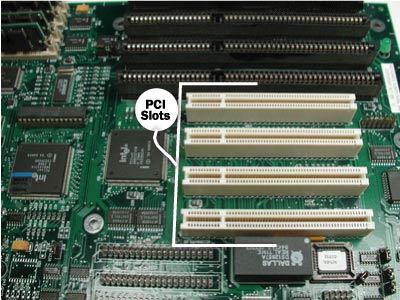
This motherboard has four PCI slots.
4. The PnP BIOS scans the PCI bus for hardware. It does this by sending out a signal to any device connected to the bus, asking the device who it is.
5. The sound card responds by identifying itself. The device ID is sent back across the bus to the BIOS.
6. The PnP BIOS checks the ESCD to see if the configuration data for the sound card is already present. Since the sound card was just installed, there is no existing ESCD record for it.
7. The PnP BIOS assigns IRQ, DMA, memory address and I/O settings to the sound card and saves the data in the ESCD.
8. Windows XP boots up. It checks the ESCD and the PCI bus. The operating system detects that the sound card is a new device and displays a small window telling you that Windows has found new hardware and is determining what it is.
9. In many cases, Windows XP will identify the device, find and load the necessary drivers, and you'll be ready to go. If not, the "Found New Hardware Wizard" will open up. This will direct you to install drivers off of the disc that came with the sound card.
10. Once the driver is installed, the device should be ready for use. Some devices may require that you restart the computer before you can use them. In our example, the sound card is immediately ready for use.
11. You want to capture some audio from an external tape deck that you have plugged into the sound card. You set up the recording software that came with the sound card and begin to record.
12. The audio comes into the sound card via an external audio connector. The sound card converts the analog signal to a digital signal.
13. The digital audio data from the sound card is carried across the PCI bus to the bus controller. The controller determines which device on the PCI device has priority to send data to the CPU. It also checks to see if data is going directly to the CPU or to system memory.
14. Since the sound card is in record mode, the bus controller assigns a high priority to the data coming from it and sends the sound card's data over the bus bridge to the system bus.
15. The system bus saves the data in system memory. Once the recording is complete, you can decide whether the data from the sound card is saved to a hard drive or retained in memory for additional processing
All aboard the PCI Express
As processor speeds steadily climb in the GHz range, many companies are working feverishly to develop a next-generation bus standard. Many feel that PCI, like ISA before it, is fast approaching the upper limit of what it can do.
All of the proposed new standards have something in common. They propose doing away with the shared-bus technology used in PCI and moving to a point-to-point switching connection. This means that a direct connection between two devices (nodes) on the bus is established while they are communicating with each other. Basically, while these two nodes are talking, no other device can access that path. By providing multiple direct links, such a bus can allow several devices to communicate with no chance of slowing each other down.
HyperTransport, a standard proposed by Advanced Micro Devices, Inc. (AMD), is touted by AMD as the natural progression from PCI. For each session between nodes, it provides two point-to-point links. Each link can be anywhere from 2 bits to 32 bits wide, supporting a maximum transfer rate of 6.4 GB per second. HyperTransport is designed specifically for connecting internal computer components to each other, not for connecting external devices such as removable drives. The development of bridge chips will enable PCI devices to access the HyperTransport bus.

PCI-Express, developed by Intel (and formerly know as 3GIO or 3rd Generation I/O), looks to be the "next big thing" in bus technology. At first, faster buses were developed for high-end servers. These were called PCI-X and PCI-X 2.0, but they weren't suitable for the home computer market, because it was very expensive to build motherboards with PCI-X.
PCI-Express is a completely different beast - it is aimed at the home computer market, and could revolutionize not only the performance of computers, but also the very shape and form of home computer systems. This new bus isn't just faster and capable of handling more bandwidth than PCI. PCI-Express is a point-to-point system, which allows for better performance and might even make the manufacturing of motherboards cheaper. PCI-Express slots will also accept older PCI cards, which will help them become popular more quickly than they would if everyone's PCI components were suddenly useless.
It's also scalable. A basic PCI-Express slot will be a 1x connection. This will provide enough bandwidth for high-speed Internet connections and other peripherals. The 1x means that there is one lane to carry data. If a component requires more bandwidth, PCI-Express 2x, 4x, 8x, and 16x slots can be built into motherboards, adding more lanes and allowing the system to carry more data through the connection. In fact, PCI-Express 16x slots are already available in place of the AGP graphics card slot on some motherboards. PCI-Express 16x video cards are at the cutting edge right now, costing more than $500. As prices come down and motherboards built to handle the newer cards become more common, AGP could fade into history.
Peripheral Component Interconnect (PCI) slots are such an integral part of a computer's architecture that most people take them for granted. For years, PCI has been a versatile, functional way to connect sound, video and network cards to a motherboard.
But PCI has some shortcomings. As processors, video cards, sound cards and networks have gotten faster and more powerful, PCI has stayed the same. It has a fixed width of 32 bits and can handle only 5 devices at a time. The newer, 64-bit PCI-X bus provides more bandwidth, but its greater width compounds some of PCI's other issues.
A new protocol called PCI Express (PCIe) eliminates a lot of these shortcomings, provides more bandwidth and is compatible with existing operating systems.
High-Speed Serial Connection
In the early days of computing, a vast amount of data moved over serial connections. Computers separated data into packets and then moved the packets from one place to another one at a time. Serial connections were reliable but slow, so manufacturers began using parallel connections to send multiple pieces of data simultaneously.
It turns out that parallel connections have their own problems as speeds get higher and higher -- for example, wires can interfere with each other electromagnetically -- so now the pendulum is swinging back toward highly-optimized serial connections. Improvements to hardware and to the process of dividing, labeling and reassembling packets have led to much faster serial connections, such as USB 2.0 and FireWire.
Sizing Up
Smaller PCIe cards will fit into larger PCIe slots. The computer simply ignores the extra connections. For example, a x4 card can plug into a x16 slot. A x16 card, however, would be too big for a x4 slot.
PCI Express is a serial connection that operates more like a network than a bus. Instead of one bus that handles data from multiple sources, PCIe has a switch that controls several point-to-point serial connections. These connections fan out from the switch, leading directly to the devices where the data needs to go. Every device has its own dedicated connection, so devices no longer share bandwidth like they do on a normal bus.
When the computer starts up, PCIe determines which devices are plugged into the motherboard. It then identifies the links between the devices, creating a map of where traffic will go and negotiating the width of each link. This identification of devices and connections is the same protocol PCI uses, so PCIe does not require any changes to software or operating systems.
Each lane of a PCI Express connection contains two pairs of wires -- one to send and one to receive. Packets of data move across the lane at a rate of one bit per cycle. A x1 connection, the smallest PCIe connection, has one lane made up of four wires. It carries one bit per cycle in each direction. A x2 link contains eight wires and transmits two bits at once, a x4 link transmits four bits, and so on. Other configurations are x12, x16 and x32.
PCI Express is available for desktop and laptop PCs. Its use may lead to lower cost of motherboard production, since its connections contain fewer pins than PCI connections do. It also has the potential to support many devices, including Ethernet cards, USB 2 and video cards.
Two by Two
The "x" in an "x16" connection stands for "by." PCIe connections are scalable by one, by two, by four, and so on.
But how can one serial connection be faster than the 32 wires of PCI or the 64 wires of PCIx? How is PCIe able to provide a vast amount of bandwidth in a serial format?
Faster Speeds, Fewer Connections
The 32-bit PCI bus has a maximum speed of 33 MHz, which allows a maximum of 133 MB of data to pass through the bus per second. The 64-bit PCI-X bus has twice the bus width of PCI. Different PCI-X specifications allow different rates of data transfer, anywhere from 512 MB to 1 GB of data per second.
Devices using PCI share a common bus, but each device using PCI Express has its own dedicated connection to the switch.
A single PCI Express lane, however, can handle 200 MB of traffic in each direction per second. A x16 PCIe connector can move an amazing 6.4 GB of data per second in each direction. At these speeds, a x1 connection can easily handle a gigabit Ethernet connection as well as audio and storage applications. A x16 connection can easily handle powerful graphics adapters.
How is this possible? A few simple advances have contributed to this massive jump in serial connection speed: Taking Apart and Putting Together
PCIe breaks data into packets, marks the packets for reassembly at their destination and reassembles the packets very quickly -- so quickly that the process goes unnoticed by the rest of the computer.
Prioritization of data, which allows the system to move the most important data first and helps prevent bottlenecks
Time-dependent (real-time) data transfers
Improvements in the physical materials used to make the connections
Better handshaking and error detection
Better methods for breaking data into packets and putting the packets together again. Also, since each device has its own dedicated, point-to-point connection to the switch, signals from multiple sources no longer have to work their way through the same bus.
Slowing the Bus
Interference and signal degradation are common in parallel connections. Poor materials and crossover signal from nearby wires translate into noise, which slows the connection down. The additional bandwidth of the PCI-X bus means it can carry more data that can generate even more noise. The PCI protocol also does not prioritize data, so more important data can get caught in the bottleneck. Using the Accelerated Graphics Port (AGP) slot for video cards removes a substantial amount of traffic, but not enough to compensate for faster processors and I/O devices.
PCI Express and Advanced Graphics
So PCIe can eliminate the need for an AGP connection. A x16 PCIe slot can accommodate far more data per second than current AGP 8x connections allow. In addition, a x16 PCIe slot can supply 75 watts of power to the video card, as opposed to the 25watt/42 watt AGP 8x connection. But PCIe has even more impressive potential in store for the future of graphics technology.
With the right hardware, a motherboard with two x16 PCIe connections can support two graphics adapters at the same time. Several manufacturers are developing and releasing systems to take advantage of this feature:
NVIDIA Scalable Link Interface (SLI): With an SLI-certified motherboard, two SLI graphics cards and an SLI connector, a user can put two video cards into the same system. The cards work together by splitting the screen in half. Each card controls half of the screen, and the connector makes sure that everything stays synchronized.
ATI CrossFire: Two ATI Radeon® video cards, one with a "compositing engine" chip, plug into a compatible motherboard. ATI's technology focuses on image quality and does not require identical video cards, although high-performance systems must have identical cards. Crossfire divides up the work of rendering in one of three ways:
splitting the screen in half and assigning one half to each card (called "scissoring")
dividing up the screen into tiles (like a checkerboard) and having one card render the "white" tiles and the other render the "black" tiles
having each card render alternate frames
Alienware Video Array: Two off-the-shelf video cards combine with a Video Merger Hub and proprietary software. This system will use specialized cooling and power systems to handle all the extra heat and energy from the video cards. Alienware's technology may eventually support as many as four video cards.
The Future of PCI Express
Since PCI, PCI-X and PCI Express are all compatible, all three can coexist indefinitely. So far, video cards have made the fastest transition to the PCIe format. Network and sound adapters, as well as other peripherals, have been slower in development. But since PCIe is compatible with current operating systems and can provide faster speeds, it is likely that it will eventually replace PCI as a PC standard. Gradually, PCI-based cards will become obsolete.
The idea of a bus is simple -- it lets you connect components to the computer's processor. Some of the components that you might want to connect include hard disks, memory, sound systems, and video systems and so on. For example, to see what your computer is doing, you normally use a CRT or LCD screen. You need special hardware to drive the screen, so the screen is driven by a graphics card. A graphics card is a small printed circuit board designed to plug into the bus. The graphics card talks to the processor using the computer's bus as a communication path.
The advantage of a bus is that it makes parts more interchangeable. If you want to get a better graphics card, you simply unplug the old card from the bus and plug in a new one. If you want two monitors on your computer, you plug two graphics cards into the bus. And so on.
Twenty or 30 years ago, the processors were so slow that the processor and the bus were synchronized -- the bus ran at the same speed as the processor, and there was one bus in the machine. Today, the processors run so fast that most computers have two or more buses. Each bus specializes in a certain type of traffic.
A typical desktop PC today has two main buses:
The first one, known as the system bus or local bus, connects the microprocessor (central processing unit) and the system memory. This is the fastest bus in the system.
The second one is a slower bus for communicating with things like hard disks and sound cards. One very common bus of this type is known as the PCI bus. These slower buses connect to the system bus through a bridge, which is a part of the computer's chipset and acts as a traffic cop, integrating the data from the other buses to the system bus.
Technically there are other buses as well. For example, the Universal Serial Bus (USB) is a way of connecting things like cameras, scanners and printers to your computer. It uses a thin wire to connect to the devices, and many devices can share that wire simultaneously. Firewire is another bus, used today mostly for video cameras and external hard drives.

Quick History
The original PC bus in the original IBM PC (circa 1982) was 16 bits wide and operated at 4.77 MHz. It officially became known as the ISA bus. This bus design is capable of passing along data at a rate of up to 9 MBps (megabytes per second) or so, fast enough even for many of today's applications.
Several years ago, the ISA bus was still used on many computers. That bus accepted computer cards developed for the original IBM PC in the early 1980s. The ISA bus remained in use even after more advanced technologies were available to replace it.
There were a couple of key reasons for its longevity:
Long-term compatibility with a large number of hardware manufacturers.
Before the rise of multimedia, few hardware peripherals fully utilized the speed of the newer bus.
As technology advanced and the ISA bus failed to keep up, other buses were developed. Key among these were Extended Industry Standard Architecture (EISA) -- which was 32 bits at 8 MHz-- and Vesa Local Bus (VL-Bus). The cool thing about VL-Bus (named after VESA, the Video Electronics Standards Association, which created the standard) is that it was 32 bits wide and operated at the speed of the local bus, which was normally the speed of the processor itself. The VL-Bus essentially tied directly into the CPU. This worked okay for a single device, or maybe even two. But connecting more than two devices to the VL-Bus introduced the possibility of interference with the performance of the CPU. Because of this, the VL-Bus was typically used only for connecting a graphics card, a component that really benefits from high-speed access to the CPU.
Along Comes PCI
During the early 1990s, Intel introduced a new bus standard for consideration, the Peripheral Component Interconnect (PCI) bus. PCI presents a hybrid of sorts between ISA and VL-Bus. It provides direct access to system memory for connected devices, but uses a bridge to connect to the frontside bus and therefore to the CPU. Basically, this means that it is capable of even higher performance than VL-Bus while eliminating the potential for interference with the CPU.
The frontside bus is a physical connection that actually connects the processor to most of the other components in the computer, including main memory (RAM), hard drives and the PCI slots. These days, the frontside bus usually operates at 400-MHz, with newer systems running at 800-MHz.
The backside bus is a separate connection between the processor and the Level 2 cache. This bus operates at a faster speed than the frontside bus, usually at the same speed as the processor, so all that caching works as efficiently as possible. Backside buses have evolved over the years. In the 1990s, the backside bus was a wire that connected the main processor to an off-chip cache. This cache was actually a separate chip that required expensive memory. Since then, the Level 2 cache has been integrated into the main processor, making processors smaller and cheaper. Since the cache is now on the processor itself, in some ways the backside bus isn't really a bus anymore.
PCI can connect more devices than VL-Bus, up to five external components. Each of the five connectors for an external component can be replaced with two fixed devices on the motherboard. Also, you can have more than one PCI bus on the same computer, although this is rarely done. The PCI bridge chip regulates the speed of the PCI bus independently of the CPU's speed. This provides a higher degree of reliability and ensures that PCI-hardware manufacturers know exactly what to design for.

PCI cards use 47 pins.
PCI originally operated at 33 MHz using a 32-bit-wide path. Revisions to the standard include increasing the speed from 33 MHz to 66 MHz and doubling the bit count to 64. Currently, PCI-X provides for 64-bit transfers at a speed of 133 MHz for an amazing 1-GBps (gigabyte per second) transfer rate!
PCI cards use 47 pins to connect (49 pins for a mastering card, which can control the PCI bus without CPU intervention). The PCI bus is able to work with so few pins because of hardware multiplexing, which means that the device sends more than one signal over a single pin. Also, PCI supports devices that use either 5 volts or 3.3 volts
PCI vs. AGP
The PCI bus was adequate for many years, providing enough bandwidth for all the peripherals most users might want to connect. All except one: graphics cards. In the mid 1990s, graphics cards were getting more and more powerful, and 3D games were demanding higher performance. The PCI bus just couldn't handle all the information passing between the main processor and the graphics processor. As a result, Intel developed the Accelerated Graphics Port (AGP). AGP is a bus dedicated completely to graphics cards. The bandwidth across the AGP bus isn't shared with any other components. Although PCI continues to be the bus of choice for most peripherals, AGP has taken over the specialized task of graphics processing.
Plug and Play
Plug and Play (PnP) means that you can connect a device or insert a card into your computer and it is automatically recognized and configured to work in your system. PnP is a simple concept, but it took a concerted effort on the part of the computer industry to make it happen. Intel created the PnP standard and incorporated it into the design for PCI. But it wasn't until several years later that a mainstream operating system, Windows 95, provided system-level support for PnP. The introduction of PnP accelerated the demand for computers with PCI, very quickly supplanting ISA as the bus of choice.
To be fully implemented, PnP requires three things:
PnP BIOS - The core utility that enables PnP and detects PnP devices. The BIOS also reads the ESCD for configuration information on existing PnP devices.
Extended System Configuration Data (ESCD) - A file that contains information about installed PnP devices.
PnP operating system - Any operating system, such as Windows XP, that supports PnP. PnP handlers in the operating system complete the configuration process started by the BIOS for each PnP device. PnP automates several key tasks that were typically done either manually or with an installation utility provided by the hardware manufacturer. These tasks include the setting of:
o Interrupt requests (IRQ) - An IRQ, also known as a hardware interrupt, is used by the various parts of a computer to get the attention of the CPU. For example, the mouse sends an IRQ every time it is moved to let the CPU know that it's doing something. Before PCI, every hardware component needed a separate IRQ setting. But PCI manages hardware interrupts at the bus bridge, allowing it to use a single system IRQ for multiple PCI devices.
o Direct memory access (DMA) - This simply means that the device is configured to access system memory without consulting the CPU first.
o Memory addresses - Many devices are assigned a section of system memory for exclusive use by that device. This ensures that the hardware will have the needed resources to operate properly.
o Input/Output (I/O) configuration - This setting defines the ports used by the device for receiving and sending information.
While PnP makes it much easier to add devices to your computer, it is not infallible.
Variations in the software routines used by PnP BIOS developers, PCI device manufacturers and Microsoft have led many to refer to PnP as "Plug and Pray." But the overall effect of PnP has been to greatly simplify the process of upgrading your computer to add new devices or replace existing ones.
How It Works
Let's say that you have just added a new PCI-based sound card to your Windows XP computer. Here's an example of how it would work.
1. You open up your computer's case and plug the sound card into an empty PCI slot on the motherboard.
2. You close the computer's case and power up the computer.
3. The system BIOS initiates the PnP BIOS.

This motherboard has four PCI slots.
4. The PnP BIOS scans the PCI bus for hardware. It does this by sending out a signal to any device connected to the bus, asking the device who it is.
5. The sound card responds by identifying itself. The device ID is sent back across the bus to the BIOS.
6. The PnP BIOS checks the ESCD to see if the configuration data for the sound card is already present. Since the sound card was just installed, there is no existing ESCD record for it.
7. The PnP BIOS assigns IRQ, DMA, memory address and I/O settings to the sound card and saves the data in the ESCD.
8. Windows XP boots up. It checks the ESCD and the PCI bus. The operating system detects that the sound card is a new device and displays a small window telling you that Windows has found new hardware and is determining what it is.
9. In many cases, Windows XP will identify the device, find and load the necessary drivers, and you'll be ready to go. If not, the "Found New Hardware Wizard" will open up. This will direct you to install drivers off of the disc that came with the sound card.
10. Once the driver is installed, the device should be ready for use. Some devices may require that you restart the computer before you can use them. In our example, the sound card is immediately ready for use.
11. You want to capture some audio from an external tape deck that you have plugged into the sound card. You set up the recording software that came with the sound card and begin to record.
12. The audio comes into the sound card via an external audio connector. The sound card converts the analog signal to a digital signal.
13. The digital audio data from the sound card is carried across the PCI bus to the bus controller. The controller determines which device on the PCI device has priority to send data to the CPU. It also checks to see if data is going directly to the CPU or to system memory.
14. Since the sound card is in record mode, the bus controller assigns a high priority to the data coming from it and sends the sound card's data over the bus bridge to the system bus.
15. The system bus saves the data in system memory. Once the recording is complete, you can decide whether the data from the sound card is saved to a hard drive or retained in memory for additional processing
All aboard the PCI Express
As processor speeds steadily climb in the GHz range, many companies are working feverishly to develop a next-generation bus standard. Many feel that PCI, like ISA before it, is fast approaching the upper limit of what it can do.
All of the proposed new standards have something in common. They propose doing away with the shared-bus technology used in PCI and moving to a point-to-point switching connection. This means that a direct connection between two devices (nodes) on the bus is established while they are communicating with each other. Basically, while these two nodes are talking, no other device can access that path. By providing multiple direct links, such a bus can allow several devices to communicate with no chance of slowing each other down.
HyperTransport, a standard proposed by Advanced Micro Devices, Inc. (AMD), is touted by AMD as the natural progression from PCI. For each session between nodes, it provides two point-to-point links. Each link can be anywhere from 2 bits to 32 bits wide, supporting a maximum transfer rate of 6.4 GB per second. HyperTransport is designed specifically for connecting internal computer components to each other, not for connecting external devices such as removable drives. The development of bridge chips will enable PCI devices to access the HyperTransport bus.
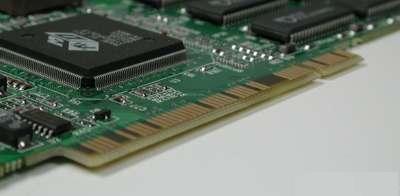
PCI-Express, developed by Intel (and formerly know as 3GIO or 3rd Generation I/O), looks to be the "next big thing" in bus technology. At first, faster buses were developed for high-end servers. These were called PCI-X and PCI-X 2.0, but they weren't suitable for the home computer market, because it was very expensive to build motherboards with PCI-X.
PCI-Express is a completely different beast - it is aimed at the home computer market, and could revolutionize not only the performance of computers, but also the very shape and form of home computer systems. This new bus isn't just faster and capable of handling more bandwidth than PCI. PCI-Express is a point-to-point system, which allows for better performance and might even make the manufacturing of motherboards cheaper. PCI-Express slots will also accept older PCI cards, which will help them become popular more quickly than they would if everyone's PCI components were suddenly useless.
It's also scalable. A basic PCI-Express slot will be a 1x connection. This will provide enough bandwidth for high-speed Internet connections and other peripherals. The 1x means that there is one lane to carry data. If a component requires more bandwidth, PCI-Express 2x, 4x, 8x, and 16x slots can be built into motherboards, adding more lanes and allowing the system to carry more data through the connection. In fact, PCI-Express 16x slots are already available in place of the AGP graphics card slot on some motherboards. PCI-Express 16x video cards are at the cutting edge right now, costing more than $500. As prices come down and motherboards built to handle the newer cards become more common, AGP could fade into history.
Peripheral Component Interconnect (PCI) slots are such an integral part of a computer's architecture that most people take them for granted. For years, PCI has been a versatile, functional way to connect sound, video and network cards to a motherboard.
But PCI has some shortcomings. As processors, video cards, sound cards and networks have gotten faster and more powerful, PCI has stayed the same. It has a fixed width of 32 bits and can handle only 5 devices at a time. The newer, 64-bit PCI-X bus provides more bandwidth, but its greater width compounds some of PCI's other issues.
A new protocol called PCI Express (PCIe) eliminates a lot of these shortcomings, provides more bandwidth and is compatible with existing operating systems.
High-Speed Serial Connection
In the early days of computing, a vast amount of data moved over serial connections. Computers separated data into packets and then moved the packets from one place to another one at a time. Serial connections were reliable but slow, so manufacturers began using parallel connections to send multiple pieces of data simultaneously.
It turns out that parallel connections have their own problems as speeds get higher and higher -- for example, wires can interfere with each other electromagnetically -- so now the pendulum is swinging back toward highly-optimized serial connections. Improvements to hardware and to the process of dividing, labeling and reassembling packets have led to much faster serial connections, such as USB 2.0 and FireWire.
Sizing Up
Smaller PCIe cards will fit into larger PCIe slots. The computer simply ignores the extra connections. For example, a x4 card can plug into a x16 slot. A x16 card, however, would be too big for a x4 slot.
PCI Express is a serial connection that operates more like a network than a bus. Instead of one bus that handles data from multiple sources, PCIe has a switch that controls several point-to-point serial connections. These connections fan out from the switch, leading directly to the devices where the data needs to go. Every device has its own dedicated connection, so devices no longer share bandwidth like they do on a normal bus.
When the computer starts up, PCIe determines which devices are plugged into the motherboard. It then identifies the links between the devices, creating a map of where traffic will go and negotiating the width of each link. This identification of devices and connections is the same protocol PCI uses, so PCIe does not require any changes to software or operating systems.
Each lane of a PCI Express connection contains two pairs of wires -- one to send and one to receive. Packets of data move across the lane at a rate of one bit per cycle. A x1 connection, the smallest PCIe connection, has one lane made up of four wires. It carries one bit per cycle in each direction. A x2 link contains eight wires and transmits two bits at once, a x4 link transmits four bits, and so on. Other configurations are x12, x16 and x32.
PCI Express is available for desktop and laptop PCs. Its use may lead to lower cost of motherboard production, since its connections contain fewer pins than PCI connections do. It also has the potential to support many devices, including Ethernet cards, USB 2 and video cards.
Two by Two
The "x" in an "x16" connection stands for "by." PCIe connections are scalable by one, by two, by four, and so on.
But how can one serial connection be faster than the 32 wires of PCI or the 64 wires of PCIx? How is PCIe able to provide a vast amount of bandwidth in a serial format?
Faster Speeds, Fewer Connections
The 32-bit PCI bus has a maximum speed of 33 MHz, which allows a maximum of 133 MB of data to pass through the bus per second. The 64-bit PCI-X bus has twice the bus width of PCI. Different PCI-X specifications allow different rates of data transfer, anywhere from 512 MB to 1 GB of data per second.
Devices using PCI share a common bus, but each device using PCI Express has its own dedicated connection to the switch.
A single PCI Express lane, however, can handle 200 MB of traffic in each direction per second. A x16 PCIe connector can move an amazing 6.4 GB of data per second in each direction. At these speeds, a x1 connection can easily handle a gigabit Ethernet connection as well as audio and storage applications. A x16 connection can easily handle powerful graphics adapters.
How is this possible? A few simple advances have contributed to this massive jump in serial connection speed: Taking Apart and Putting Together
PCIe breaks data into packets, marks the packets for reassembly at their destination and reassembles the packets very quickly -- so quickly that the process goes unnoticed by the rest of the computer.
Prioritization of data, which allows the system to move the most important data first and helps prevent bottlenecks
Time-dependent (real-time) data transfers
Improvements in the physical materials used to make the connections
Better handshaking and error detection
Better methods for breaking data into packets and putting the packets together again. Also, since each device has its own dedicated, point-to-point connection to the switch, signals from multiple sources no longer have to work their way through the same bus.
Slowing the Bus
Interference and signal degradation are common in parallel connections. Poor materials and crossover signal from nearby wires translate into noise, which slows the connection down. The additional bandwidth of the PCI-X bus means it can carry more data that can generate even more noise. The PCI protocol also does not prioritize data, so more important data can get caught in the bottleneck. Using the Accelerated Graphics Port (AGP) slot for video cards removes a substantial amount of traffic, but not enough to compensate for faster processors and I/O devices.
PCI Express and Advanced Graphics
So PCIe can eliminate the need for an AGP connection. A x16 PCIe slot can accommodate far more data per second than current AGP 8x connections allow. In addition, a x16 PCIe slot can supply 75 watts of power to the video card, as opposed to the 25watt/42 watt AGP 8x connection. But PCIe has even more impressive potential in store for the future of graphics technology.
With the right hardware, a motherboard with two x16 PCIe connections can support two graphics adapters at the same time. Several manufacturers are developing and releasing systems to take advantage of this feature:
NVIDIA Scalable Link Interface (SLI): With an SLI-certified motherboard, two SLI graphics cards and an SLI connector, a user can put two video cards into the same system. The cards work together by splitting the screen in half. Each card controls half of the screen, and the connector makes sure that everything stays synchronized.
ATI CrossFire: Two ATI Radeon® video cards, one with a "compositing engine" chip, plug into a compatible motherboard. ATI's technology focuses on image quality and does not require identical video cards, although high-performance systems must have identical cards. Crossfire divides up the work of rendering in one of three ways:
splitting the screen in half and assigning one half to each card (called "scissoring")
dividing up the screen into tiles (like a checkerboard) and having one card render the "white" tiles and the other render the "black" tiles
having each card render alternate frames
Alienware Video Array: Two off-the-shelf video cards combine with a Video Merger Hub and proprietary software. This system will use specialized cooling and power systems to handle all the extra heat and energy from the video cards. Alienware's technology may eventually support as many as four video cards.
The Future of PCI Express
Since PCI, PCI-X and PCI Express are all compatible, all three can coexist indefinitely. So far, video cards have made the fastest transition to the PCIe format. Network and sound adapters, as well as other peripherals, have been slower in development. But since PCIe is compatible with current operating systems and can provide faster speeds, it is likely that it will eventually replace PCI as a PC standard. Gradually, PCI-based cards will become obsolete.
Wednesday, March 01, 2006
Formula-1: Comparison between the old V10 and new V8 engine
BMW explains
Although the V8 with the now compulsory cylinder angle of 90 degrees may look like a sawn-off V10, technically it is an entirely separate concept with its own specific requirements. The V8 has a distinct firing sequence and demands a fundamentally different crankshaft design. Whereas a 72-degree offset crankshaft was used in BMW’s V10 Formula One engine, V8 powerplants can feature crankshafts with either four throws spaced at 90 degrees or four throws spaced at 180 degrees.
Standard production engines are fitted with 90-degree crankshaft variants due to their better dynamic attributes, but a 180-degree crankshaft is favoured in racing car engine design. The improved performance this allows offsets the disadvantages in terms of dynamics.
Indeed, mechanical dynamics and vibrations represent a particularly critical area of development for the new generation of Formula One engines. The V8 units have different firing sequences and intervals from their V10 predecessors, which leads to a totally different situation in terms of vibrations. The V10 entered a critical area in terms of vibrations between 12,000 rpm and 14,000 rpm. However, this was not an issue as the engine did not spend much time in this rev band and smoothed itself out again once the driver stepped up the revs. And, since that was where it spent the majority of its time, vibrations were not a worry. A V8, on the other hand, is not so well off. Its vibration curve enters critical territory later than the V10 - from approximately 16,000 rpm - and continues to climb from there. It is therefore no longer possible to think in terms of getting through a difficult patch and everything will be all right.
Now, the problem of constantly increasing vibrations has to be confronted head on. If you don’t get a handle on vibrations, they will eat into the service life of the engine and multiply the loads exerted on chassis components. In order to get on top of this problem, the calculation and analysis of each individual engine component has to be totally reliable. However, analysis of the individual components is only part of a bigger challenge. Determining how they work with and against each other in simulations of the overall system is the main task.
Reduced mass should mean less in the way of ‘bad vibrations’. However, the regulations have sensibly nipped any natural tendency among the teams to reach straight for exotic - and expensive - ultra-light materials in the bud. The engineers work with conventional titanium and aluminium alloys, as stipulated in the regulations. The new V8 has to be heavier than its predecessor, even though the 2005 engine had two extra cylinders. This season’s powerplants must tip the scales at no less than 95 kilograms. This should include the intake system up to and including the air filter, fuel rail and injectors, ignition coils, sensors and wiring, alternator, coolant pumps and oil pumps. It does not include liquids, exhaust manifolds, heat protection shields, oil tanks, accumulators, heat exchangers and the hydraulic pump.
Added to which, the new regulations stipulate that the engine’s centre of gravity must be at least 165 millimetres above the lower edge of the oil sump. The experts had previously managed to lower the ten-cylinder engine’s centre of gravity to the benefit of the car’s handling. However, the longitudinal and lateral position of the V8’s centre of gravity has to be in the geometric centre of the engine (+/-50 millimetres). For the technical commission, checking that everything is in order no longer consists of a simple weighing process. Now, making sure that the rules have been observed involves weighing on two levels and making calculations according to the lever principle.
Previously a closely guarded secret, the dimensions of the cylinder bore are now limited to a maximum 98 millimetres. The gap between the cylinders is also set out in the rulebook at 106.5 millimetres (+/- 0.2 mm). The central axis of the crankshaft must not lie any less than 58 millimetres above the reference plane Another critical change in the regulations is the ban on variable intake systems.
Known as 'trumpets', these systems could previously be used to optimise the car’s torque curve. The fixed duct lengths will now make achieving good engine driveability a more exacting challenge. The teams will have to strike a compromise between maximum power and good driveability. Where the best compromise for the pipe lengths is to be found depends on various factors. The track layout and the weather, for example, both play a role.
The teams will favour one set of intake pipe lengths for circuits with long straights - like Monza, Indianapolis and Spa - where power is critical, and a different selection for twistier Grand Prix tracks such as Budapest and Monaco, where driveability relegates raw power to the back seat. The same applies in wet weather. The air intakes are, by definition, part of the engine and are included in its 95-kilogram maximum overall weight, but they can also be changed up to qualifying.
Joining variable intake systems on the black list are variable exhaust systems and variable valve control systems. The power supply to the engine electrics and electronics is limited to a maximum 17 volts and the fuel pump now has to be mechanically operated. Only an actuator may now be used to activate the throttle valve system. With the exception of the electric auxiliary pumps in the petrol tank, all sub-components must now be driven mechanically and directly via the engine.
Although the V8 with the now compulsory cylinder angle of 90 degrees may look like a sawn-off V10, technically it is an entirely separate concept with its own specific requirements. The V8 has a distinct firing sequence and demands a fundamentally different crankshaft design. Whereas a 72-degree offset crankshaft was used in BMW’s V10 Formula One engine, V8 powerplants can feature crankshafts with either four throws spaced at 90 degrees or four throws spaced at 180 degrees.
Standard production engines are fitted with 90-degree crankshaft variants due to their better dynamic attributes, but a 180-degree crankshaft is favoured in racing car engine design. The improved performance this allows offsets the disadvantages in terms of dynamics.
Indeed, mechanical dynamics and vibrations represent a particularly critical area of development for the new generation of Formula One engines. The V8 units have different firing sequences and intervals from their V10 predecessors, which leads to a totally different situation in terms of vibrations. The V10 entered a critical area in terms of vibrations between 12,000 rpm and 14,000 rpm. However, this was not an issue as the engine did not spend much time in this rev band and smoothed itself out again once the driver stepped up the revs. And, since that was where it spent the majority of its time, vibrations were not a worry. A V8, on the other hand, is not so well off. Its vibration curve enters critical territory later than the V10 - from approximately 16,000 rpm - and continues to climb from there. It is therefore no longer possible to think in terms of getting through a difficult patch and everything will be all right.
Now, the problem of constantly increasing vibrations has to be confronted head on. If you don’t get a handle on vibrations, they will eat into the service life of the engine and multiply the loads exerted on chassis components. In order to get on top of this problem, the calculation and analysis of each individual engine component has to be totally reliable. However, analysis of the individual components is only part of a bigger challenge. Determining how they work with and against each other in simulations of the overall system is the main task.
Reduced mass should mean less in the way of ‘bad vibrations’. However, the regulations have sensibly nipped any natural tendency among the teams to reach straight for exotic - and expensive - ultra-light materials in the bud. The engineers work with conventional titanium and aluminium alloys, as stipulated in the regulations. The new V8 has to be heavier than its predecessor, even though the 2005 engine had two extra cylinders. This season’s powerplants must tip the scales at no less than 95 kilograms. This should include the intake system up to and including the air filter, fuel rail and injectors, ignition coils, sensors and wiring, alternator, coolant pumps and oil pumps. It does not include liquids, exhaust manifolds, heat protection shields, oil tanks, accumulators, heat exchangers and the hydraulic pump.
Added to which, the new regulations stipulate that the engine’s centre of gravity must be at least 165 millimetres above the lower edge of the oil sump. The experts had previously managed to lower the ten-cylinder engine’s centre of gravity to the benefit of the car’s handling. However, the longitudinal and lateral position of the V8’s centre of gravity has to be in the geometric centre of the engine (+/-50 millimetres). For the technical commission, checking that everything is in order no longer consists of a simple weighing process. Now, making sure that the rules have been observed involves weighing on two levels and making calculations according to the lever principle.
Previously a closely guarded secret, the dimensions of the cylinder bore are now limited to a maximum 98 millimetres. The gap between the cylinders is also set out in the rulebook at 106.5 millimetres (+/- 0.2 mm). The central axis of the crankshaft must not lie any less than 58 millimetres above the reference plane Another critical change in the regulations is the ban on variable intake systems.
Known as 'trumpets', these systems could previously be used to optimise the car’s torque curve. The fixed duct lengths will now make achieving good engine driveability a more exacting challenge. The teams will have to strike a compromise between maximum power and good driveability. Where the best compromise for the pipe lengths is to be found depends on various factors. The track layout and the weather, for example, both play a role.
The teams will favour one set of intake pipe lengths for circuits with long straights - like Monza, Indianapolis and Spa - where power is critical, and a different selection for twistier Grand Prix tracks such as Budapest and Monaco, where driveability relegates raw power to the back seat. The same applies in wet weather. The air intakes are, by definition, part of the engine and are included in its 95-kilogram maximum overall weight, but they can also be changed up to qualifying.
Joining variable intake systems on the black list are variable exhaust systems and variable valve control systems. The power supply to the engine electrics and electronics is limited to a maximum 17 volts and the fuel pump now has to be mechanically operated. Only an actuator may now be used to activate the throttle valve system. With the exception of the electric auxiliary pumps in the petrol tank, all sub-components must now be driven mechanically and directly via the engine.
Monday, February 27, 2006
Honey, croc ate my wedding ring!
"He took my wedding ring, I suppose he ate it up," Abrahamse told Reuters by telephone from his hospital on Monday as he recounted his life-or-death struggle with a man-eating reptile.
The 47-year-old farm manager had the lower part of his left arm torn off in the attack last Thursday on a citrus plantation in South Africa's northern Limpopo province.
But he's counting his blessings as he could easily have lost his life.
"I took my horse for an evening swim in one of the farm dams. There are lots of crocs and hippos in the area, but they move around all the time, from dam to dam and into the river and out again," he said.
"I was on the lookout for hippos and didn't see any. It slipped my mind that there might be crocodiles," he said.
He was standing belly-deep in water about five meters from the shore when he felt a biting jolt in his left hip. He said thought it was a hippo but quickly realized it was a crocodile.
"I started to fight immediately. So I hit him with my left arm and then he went for my left forearm," Abrahamse said.
"It pulled me under the water for a few seconds, and I knew this was his biggest advantage. I realized if I didn't stand up my wife will never find me again," he said.
Somehow, he managed to stumble to his feet and then he felt the crocodile lose its grip.
"What I didn't realize at the time was that it had let go because it had taken part of my left arm off," he said.
With his right arm, Abrahamse then grabbed the rope of his horse, which fortunately for him chose that moment to take flight, dragging him to safety.
Abrahamse then walked 200 meters to his house and his wife drove him 60 kilometers (40 miles) to the nearest hospital.
"I'm lucky, I didn't lose too much blood ... The biggest problem with a croc bite is it can be septic. They never brush their teeth," Abrahamse said.
And when he gets out of the hospital does he plan to look for the culprit? "Oh yes, I'll be looking for him alright," he said with a laugh.
The 47-year-old farm manager had the lower part of his left arm torn off in the attack last Thursday on a citrus plantation in South Africa's northern Limpopo province.
But he's counting his blessings as he could easily have lost his life.
"I took my horse for an evening swim in one of the farm dams. There are lots of crocs and hippos in the area, but they move around all the time, from dam to dam and into the river and out again," he said.
"I was on the lookout for hippos and didn't see any. It slipped my mind that there might be crocodiles," he said.
He was standing belly-deep in water about five meters from the shore when he felt a biting jolt in his left hip. He said thought it was a hippo but quickly realized it was a crocodile.
"I started to fight immediately. So I hit him with my left arm and then he went for my left forearm," Abrahamse said.
"It pulled me under the water for a few seconds, and I knew this was his biggest advantage. I realized if I didn't stand up my wife will never find me again," he said.
Somehow, he managed to stumble to his feet and then he felt the crocodile lose its grip.
"What I didn't realize at the time was that it had let go because it had taken part of my left arm off," he said.
With his right arm, Abrahamse then grabbed the rope of his horse, which fortunately for him chose that moment to take flight, dragging him to safety.
Abrahamse then walked 200 meters to his house and his wife drove him 60 kilometers (40 miles) to the nearest hospital.
"I'm lucky, I didn't lose too much blood ... The biggest problem with a croc bite is it can be septic. They never brush their teeth," Abrahamse said.
And when he gets out of the hospital does he plan to look for the culprit? "Oh yes, I'll be looking for him alright," he said with a laugh.
Thursday, February 23, 2006
Rowing from a Six Sigma Lean perspective
A Japanese company and an American company decided to have a canoe race on the Mississippi River. Both teams practiced long and hard to reach their peak performance before the race.
On the big day, the Japanese won by a mile. The Americans, very discouraged and depressed, decided to investigate the reason for the crushing defeat. A management team made up of senior management and internal Lost Race Analysts was formed to investigate and recommend appropriate action. Their conclusion was the Japanese had 8 people rowing and 1 person steering, while the American team had 8 people steering and 1 person rowing.
To validate their conclusions, the American management hired a consulting company and paid them a large amount of money for a second opinion. The consultant advised that too many people were steering the boat, while not enough people were rowing.
Taking pride in quick action and to prevent another loss to the Japanese, the rowing team's management structure was totally reorganized to 4 steering supervisors, 3 area steering superintendents and 1 assistant superintendent steering manager. The American HR team devised an innovative incentive that would give the 1 person rowing the boat greater rewards for working harder. It was called the "Six Sigma Lean - Pay for Rowing Performance - Total Quality Program", with meetings, dinners and free pens for the rower. There was discussion of getting new paddles, canoes and other equipment, extra vacation days for practices and bonuses.
The next year the Japanese won by two miles. Humiliated, the American management team laid off the rower for poor performance, halted development of a new canoe, sold the paddles, and canceled all capital investments for new equipment. The money saved was distributed to the Senior Executives as bonuses and the next year's racing team was outsourced to India.
On the big day, the Japanese won by a mile. The Americans, very discouraged and depressed, decided to investigate the reason for the crushing defeat. A management team made up of senior management and internal Lost Race Analysts was formed to investigate and recommend appropriate action. Their conclusion was the Japanese had 8 people rowing and 1 person steering, while the American team had 8 people steering and 1 person rowing.
To validate their conclusions, the American management hired a consulting company and paid them a large amount of money for a second opinion. The consultant advised that too many people were steering the boat, while not enough people were rowing.
Taking pride in quick action and to prevent another loss to the Japanese, the rowing team's management structure was totally reorganized to 4 steering supervisors, 3 area steering superintendents and 1 assistant superintendent steering manager. The American HR team devised an innovative incentive that would give the 1 person rowing the boat greater rewards for working harder. It was called the "Six Sigma Lean - Pay for Rowing Performance - Total Quality Program", with meetings, dinners and free pens for the rower. There was discussion of getting new paddles, canoes and other equipment, extra vacation days for practices and bonuses.
The next year the Japanese won by two miles. Humiliated, the American management team laid off the rower for poor performance, halted development of a new canoe, sold the paddles, and canceled all capital investments for new equipment. The money saved was distributed to the Senior Executives as bonuses and the next year's racing team was outsourced to India.
Thursday, February 16, 2006
Doctors speaketh....
(What doctors say, and what they're really thinking : )
"Welllllll, what have we here...?"
I have no clue? would you mind giving me a clue.
"Let's see how it develops."
Maybe in a few days it will grow into something that can be cured.
"I'd like to prescribe a new drug."
I'm writing a paper and would like to use you for a guinea pig.
"Let me check your medical history."
I want to see if you've paid your last bill before spending any more time with you.
"This may smart a little."
Last week two patients bit off their tongues.
"Well, we're not feeling so well today, are we...?"
I'm stalling for time. Who are you and why are you here?
"This should fix you up."
The drug company slipped dropped off some samples Let?s see if they work.
"I'd like to run some more tests."
I can't figure out what's wrong. Maybe the kid in the lab can solve this one.
"There is a lot of that going around."
Wow, that's the third one this week. I'd better learn something about this.
"Welllllll, what have we here...?"
I have no clue? would you mind giving me a clue.
"Let's see how it develops."
Maybe in a few days it will grow into something that can be cured.
"I'd like to prescribe a new drug."
I'm writing a paper and would like to use you for a guinea pig.
"Let me check your medical history."
I want to see if you've paid your last bill before spending any more time with you.
"This may smart a little."
Last week two patients bit off their tongues.
"Well, we're not feeling so well today, are we...?"
I'm stalling for time. Who are you and why are you here?
"This should fix you up."
The drug company slipped dropped off some samples Let?s see if they work.
"I'd like to run some more tests."
I can't figure out what's wrong. Maybe the kid in the lab can solve this one.
"There is a lot of that going around."
Wow, that's the third one this week. I'd better learn something about this.
Tuesday, February 14, 2006
Brain Tickler
What number when divided by 2, 3, 4, 5, 6, 7, 8, 9 or 10 will always leave a remainder of ONE?
Monday, February 13, 2006
End the trash talk
There has been much innuendo about Tendulkar's batting in recent times, with many suggesting that the destroyer of old had given way to a nudger and accumulator. After the initial circumspection however, Tendulkar took out both bludgeon and rapier, driving, pulling and cutting with immense power with the cascade of boundaries that followed was all the more impressive for the fact that he was clearly struggling with cramps.
All such comments are worth nothing and are written by newbie journalists who have nothing better to write. The same journalists wrote Tendulkar off when he had a niggling back problem back in 1997-1998. They pledged their life savings when Tendulkar was absent from the game for 6 months after he had a problem with his left elbow.
Tendulkar's response in all the cases against him throughout his career has been exemplary. Rather than argue with journalists (who think they "know" cricket), he has quietly sidetracked the questions and let his willow do the talking.
The last 17 years, Sachin has performed incredible feats while bearing the entire weight of the nation on his shoulders. Just imagine, that there are 100 crore people who are expecting the world from you EVERYTIME you are on the field and yes, Sachin Tendulkar has delivered time and again. He has rescued India out of hopeless situations. He has taken the bull by the horns with both bat and ball. Remember Hero cup 1993? Sachin volunteered to bowl the last over when SA needed 4 runs to win? He did and India denied SA those 4 runs and went on to win. A 19 year old youth carrying the burden of expectations of an entire nation had done it with nonchalant ease. He has taken on the other side all by himself. 1998 Sharjah: After losing to India in the final Steve Waugh remarked, "We did not lose to India today, we lost to Sachin Tendulkar"
The reason the "Endulkar" cartoon incensed me was that there was some journalist who thought that Tendulkar's time has come. Who is he to decide whether Tendulkar's time is up? The correct question is "Who is to decide whether Tendulkar's time is up"? The answer is simple: It is Sachin Tendulkar himself.
Sachin holds a special place in my heart. 1986: I was 10 years old and used to play cricket under the tutelage of Anna Vaidya. Cricket for me was purely a hobby and I knew then that I was not cut out to make a career out of it. Anna, having seen some talent in me, was grooming me to be a wicketkeeper and batsman. I used to have difficulty in playing the pull shot. After many unsuccessful tries in the nets, Anna told me to go and watch a certain Sachin Tendulkar in the Achrekar sir' nets, a few hundred feet next to Anna's. So I went, wondering who this "Sachin Tendulkar" was. There was a kid, short in stature, who was padding up and I politely went and stood behind the nets. Achrekar sir put 1 Re coin on the top of the stumps and then handed out brand new balls to the fastest bowlers in the nets. The 1 rupee coins were up for grabs and would go to the bowler who would shatter the stumps. I said to myself that this little fella is toast. These guys were about 21-22. They were huge. Since I was a wicketkeeper, I was accustomed to rising behind the stumps with the bounce of the ball. Mentally I prepared to do the same. The fast bowler started his run up. The kid lifted his bat and as soon as the bowl was released from the bowlers hand, the kid stepped out and smashed the bowler long-on's head. I swear I did not even see the bowl, while the 13 year old kid not only anticipated the pace, swing and bounce of the ball but he also selected a shot from his armory and executed it to perfection. The thing that had happened in fast forward for me had happened in slow motion for the kid in front of me. It was like he had all the time in the world to play that shot. I was stunned. That kid was Sachin Tendulkar. That day, Achrekar sir pocketed the coins which he kept on the stumps. The bowlers were found wanting. I knew that the little kid was destined for greater things and he has vindicated the faith that everyone has had in him. Sachin gave me ample examples of the pull shot needless to say, since I have not had any difficulty after that. After all, I was taught by the master!
Sad as it may seem, there will come a day when the razor sharp reflexes will start to dull, the hand to eye coordination will start dropping, and Sachin will have difficulty in keeping up with youngsters. But then, Sachin knows about it and will retire long before any thing happens which will prevent him from performing at 100%. He will bid adieu when he is at his peak. It is just not in Sachin's character to be an "also ran".
Sachin does not play international cricket for fame and fortune. He plays, for he truly loves the game. He has been playing international cricket for more than half of his life and consistency is his key. He has adapted his game to the changing circumstances. There are times when he will fight with a rapier and there are times when he will bludgeon the opposition into submission. Even after smashing all records in both variations of the game, he still is a student of the game and above all, he is humble and down to earth. He celebrates India's victory in a final and Mumbai's win in a Ranji trophy match with equal zest.
Endulkar? Time to end such trash talk...
From Cricinfo: 2/13/06
One can pull out the thesaurus and combine different adjectives to describe Sachin Tendulkar's 95 at the Gaddafi Stadium at Lahore, but nothing may convey the influence it had on the course of the run-chase. A buoyant Rahul Dravid, speaking at the post-match press conference, described Tendulkar's effort as "absolutely incredible" and went on to add that it was "one of his best innings".
"I think he assessed the situation beautifully," he said. "He realised there was something happening with the ball, realised we needed to keep wickets. The way he controlled the game, played positively without doing anything risky, was great to watch. He scored at a great pace on a difficult wicket in difficult conditions. I thought it was one of his best. There are so many he has played but this was really a special one."
Tendulkar's knock was one of the three main components of India's run-chase, with Yuvraj Singh and Mahendra Singh Dhoni complementing him admirably. "Sachin, Yuvraj and Dhoni all played critical parts in this win," he continued. "All three played different kinds of knocks in different stages. Yuvraj's maturity in stepping back, after playing positively initially, when he realised he needed to be there till the end shows that he's a very good cricketer. He's always been one and has had a lot of success in the one-day game. This tour has taken him to another level.
"Dhoni was outstanding too. It's terrific for someone new in international cricket to handle the pressure so well. He can adapt his game to the situation, knows what his team requires, and has got a good head on his shoulders. His performance over the last 6-8 months has been critical in our success."
Dhoni himself admitted felt that this was one of his best innings, putting it above his whirlwind maiden hundred at Vishakapatnam. "My 148 helped my team to win and it was at a crucial time. It was an opportunity to grab for me but the amount of pressure here was much more. This was a much better innings that way."
Dravid was candid when speaking about his decision at the toss and felt it didn't matter at the end of the day. "Even I was unsure about the toss because we're not used to the 11:00am start," he added. "Playing in the evening, we had doubts about the twilight period and whether we could sight the ball then. I don't think toss was that important. We were chasing well so we decided to field. The new ball helped in both innings so it didn't make too much of a difference."
While refusing to find fault with Pakistan, he thought his side had been the better on on the day. "I don't think there was any problem with Pakistan. They played well and their batsmen put on 288. I don't think there was any fault. We need to be given the credit for doing well."
What really heartened Dravid, though, was the improvement his side had shown in the last few months, winning 10 of their last 14 games. "Every game is different and we need to keep performing. Pakistan are not an easy team to beat at home and we need to play well to win. We're leading 2-1 and a couple of games to go. Irrespective of the results, the strides and progress we're taking as a ODI team is really heartening."
All such comments are worth nothing and are written by newbie journalists who have nothing better to write. The same journalists wrote Tendulkar off when he had a niggling back problem back in 1997-1998. They pledged their life savings when Tendulkar was absent from the game for 6 months after he had a problem with his left elbow.
Tendulkar's response in all the cases against him throughout his career has been exemplary. Rather than argue with journalists (who think they "know" cricket), he has quietly sidetracked the questions and let his willow do the talking.
The last 17 years, Sachin has performed incredible feats while bearing the entire weight of the nation on his shoulders. Just imagine, that there are 100 crore people who are expecting the world from you EVERYTIME you are on the field and yes, Sachin Tendulkar has delivered time and again. He has rescued India out of hopeless situations. He has taken the bull by the horns with both bat and ball. Remember Hero cup 1993? Sachin volunteered to bowl the last over when SA needed 4 runs to win? He did and India denied SA those 4 runs and went on to win. A 19 year old youth carrying the burden of expectations of an entire nation had done it with nonchalant ease. He has taken on the other side all by himself. 1998 Sharjah: After losing to India in the final Steve Waugh remarked, "We did not lose to India today, we lost to Sachin Tendulkar"
The reason the "Endulkar" cartoon incensed me was that there was some journalist who thought that Tendulkar's time has come. Who is he to decide whether Tendulkar's time is up? The correct question is "Who is to decide whether Tendulkar's time is up"? The answer is simple: It is Sachin Tendulkar himself.
Sachin holds a special place in my heart. 1986: I was 10 years old and used to play cricket under the tutelage of Anna Vaidya. Cricket for me was purely a hobby and I knew then that I was not cut out to make a career out of it. Anna, having seen some talent in me, was grooming me to be a wicketkeeper and batsman. I used to have difficulty in playing the pull shot. After many unsuccessful tries in the nets, Anna told me to go and watch a certain Sachin Tendulkar in the Achrekar sir' nets, a few hundred feet next to Anna's. So I went, wondering who this "Sachin Tendulkar" was. There was a kid, short in stature, who was padding up and I politely went and stood behind the nets. Achrekar sir put 1 Re coin on the top of the stumps and then handed out brand new balls to the fastest bowlers in the nets. The 1 rupee coins were up for grabs and would go to the bowler who would shatter the stumps. I said to myself that this little fella is toast. These guys were about 21-22. They were huge. Since I was a wicketkeeper, I was accustomed to rising behind the stumps with the bounce of the ball. Mentally I prepared to do the same. The fast bowler started his run up. The kid lifted his bat and as soon as the bowl was released from the bowlers hand, the kid stepped out and smashed the bowler long-on's head. I swear I did not even see the bowl, while the 13 year old kid not only anticipated the pace, swing and bounce of the ball but he also selected a shot from his armory and executed it to perfection. The thing that had happened in fast forward for me had happened in slow motion for the kid in front of me. It was like he had all the time in the world to play that shot. I was stunned. That kid was Sachin Tendulkar. That day, Achrekar sir pocketed the coins which he kept on the stumps. The bowlers were found wanting. I knew that the little kid was destined for greater things and he has vindicated the faith that everyone has had in him. Sachin gave me ample examples of the pull shot needless to say, since I have not had any difficulty after that. After all, I was taught by the master!
Sad as it may seem, there will come a day when the razor sharp reflexes will start to dull, the hand to eye coordination will start dropping, and Sachin will have difficulty in keeping up with youngsters. But then, Sachin knows about it and will retire long before any thing happens which will prevent him from performing at 100%. He will bid adieu when he is at his peak. It is just not in Sachin's character to be an "also ran".
Sachin does not play international cricket for fame and fortune. He plays, for he truly loves the game. He has been playing international cricket for more than half of his life and consistency is his key. He has adapted his game to the changing circumstances. There are times when he will fight with a rapier and there are times when he will bludgeon the opposition into submission. Even after smashing all records in both variations of the game, he still is a student of the game and above all, he is humble and down to earth. He celebrates India's victory in a final and Mumbai's win in a Ranji trophy match with equal zest.
Endulkar? Time to end such trash talk...
From Cricinfo: 2/13/06
One can pull out the thesaurus and combine different adjectives to describe Sachin Tendulkar's 95 at the Gaddafi Stadium at Lahore, but nothing may convey the influence it had on the course of the run-chase. A buoyant Rahul Dravid, speaking at the post-match press conference, described Tendulkar's effort as "absolutely incredible" and went on to add that it was "one of his best innings".
"I think he assessed the situation beautifully," he said. "He realised there was something happening with the ball, realised we needed to keep wickets. The way he controlled the game, played positively without doing anything risky, was great to watch. He scored at a great pace on a difficult wicket in difficult conditions. I thought it was one of his best. There are so many he has played but this was really a special one."
Tendulkar's knock was one of the three main components of India's run-chase, with Yuvraj Singh and Mahendra Singh Dhoni complementing him admirably. "Sachin, Yuvraj and Dhoni all played critical parts in this win," he continued. "All three played different kinds of knocks in different stages. Yuvraj's maturity in stepping back, after playing positively initially, when he realised he needed to be there till the end shows that he's a very good cricketer. He's always been one and has had a lot of success in the one-day game. This tour has taken him to another level.
"Dhoni was outstanding too. It's terrific for someone new in international cricket to handle the pressure so well. He can adapt his game to the situation, knows what his team requires, and has got a good head on his shoulders. His performance over the last 6-8 months has been critical in our success."
Dhoni himself admitted felt that this was one of his best innings, putting it above his whirlwind maiden hundred at Vishakapatnam. "My 148 helped my team to win and it was at a crucial time. It was an opportunity to grab for me but the amount of pressure here was much more. This was a much better innings that way."
Dravid was candid when speaking about his decision at the toss and felt it didn't matter at the end of the day. "Even I was unsure about the toss because we're not used to the 11:00am start," he added. "Playing in the evening, we had doubts about the twilight period and whether we could sight the ball then. I don't think toss was that important. We were chasing well so we decided to field. The new ball helped in both innings so it didn't make too much of a difference."
While refusing to find fault with Pakistan, he thought his side had been the better on on the day. "I don't think there was any problem with Pakistan. They played well and their batsmen put on 288. I don't think there was any fault. We need to be given the credit for doing well."
What really heartened Dravid, though, was the improvement his side had shown in the last few months, winning 10 of their last 14 games. "Every game is different and we need to keep performing. Pakistan are not an easy team to beat at home and we need to play well to win. We're leading 2-1 and a couple of games to go. Irrespective of the results, the strides and progress we're taking as a ODI team is really heartening."
Tuesday, February 07, 2006
GPS darts
The car chase capital of the world is going high-tech to end dangerous pursuits across Southern California.
Police Chief William J. Bratton unveiled a strange new weapon in the police department's strategy to halt high-speed pursuits -- adhesive darts with a global positioning system that are fired at fleeing cars by police.
Once fired from a patrol car, the GPS dart is designed to stick to a fleeing car, allowing squad cars to back off the chase.
"Instead of us pushing them doing 70 or 80 miles an hour," Bratton said, "this device allows us not to have to pursue after the car. It allows us to start vectoring where the car is."
U.S. Department of Justice officials suggested testing the StarChase system in Los Angeles. A small number of patrol cars will be equipped with the compressed air launchers, which fire the miniature GPS receivers in a sticky compound resembling a golf ball.
There were more than 600 pursuits in Los Angeles and more than 100,000 nationwide last year. Critics have long questioned the wisdom of police pursuits because they can endanger bystanders and officers.
Bratton, who often calls the city the car chase capital of the world, was asked why there are so many pursuits in Los Angeles: "There are a lot of nuts here," he said.
Police Chief William J. Bratton unveiled a strange new weapon in the police department's strategy to halt high-speed pursuits -- adhesive darts with a global positioning system that are fired at fleeing cars by police.
Once fired from a patrol car, the GPS dart is designed to stick to a fleeing car, allowing squad cars to back off the chase.
"Instead of us pushing them doing 70 or 80 miles an hour," Bratton said, "this device allows us not to have to pursue after the car. It allows us to start vectoring where the car is."
U.S. Department of Justice officials suggested testing the StarChase system in Los Angeles. A small number of patrol cars will be equipped with the compressed air launchers, which fire the miniature GPS receivers in a sticky compound resembling a golf ball.
There were more than 600 pursuits in Los Angeles and more than 100,000 nationwide last year. Critics have long questioned the wisdom of police pursuits because they can endanger bystanders and officers.
Bratton, who often calls the city the car chase capital of the world, was asked why there are so many pursuits in Los Angeles: "There are a lot of nuts here," he said.
Thursday, February 02, 2006
Munich / "Vengeance" by George Jonas
http://www.weeklystandard.com/Content/Public/Articles/000/000/006/540mmouk.asp
Munich Syndrome
Are George Jonas's "Vengeance" and Steven Spielberg's "Munich" really soft on terrorism?
Munich Syndrome
Are George Jonas's "Vengeance" and Steven Spielberg's "Munich" really soft on terrorism?
At the 1972 Olympics, 11 Israeli athletes were murdered in cold blood by Palestinian terrorists. As the rest of the world continued playing their games, Israel mourned. In the coming years Israel would set out to kill those responsible for the attacks and individuals who would plan, supply, and commit such atrocities in the future.
Steven Spielberg's Munich and George Jonas's Vengeance, the book on which it is based, are purportedly accounts of the Israeli hit team that set out to conduct these executions. The story of those two works is also countered by a new book, Striking Back by Aaron Klein, a correspondent for Time magazine and a captain in the Israeli Defense Force's intelligence unit. And although the two sides of the story seem to conflict, they are, at a deeper level, of a piece.
First published in May, 1984, Vengeance caused immediate controversy. The book, which reads more like a novel than a historical or journalistic work, relies on "Avner," a single, pseudonymous source for its narrative. While Jonas may have trusted his source, it is ultimately up to the reader to decide if Avner should be believed. Portions of the book were labeled as either false or unprovable by both the New York Times and Maclean's magazine.
Whether or not all the specifics of Vengeance are true, one thing can certainly be said about it: Vengeance is not a piece of mindless moral relativism. In fact, the author explicitly denounces moral relativism in his epilogue. "One can," Jonas writes, "in terms of moral justification, distinguish between counter-terrorism and terrorism in the same way one distinguishes between acts of war and war crimes. There are standards; terrorism is on the wrong side of them; counter-terrorism is not."
That is not to say that "Avner" feels nothing about killing Palestinian terrorists. Indeed, in Vengeance he and the rest of the Israeli team are, for the most part, happy with their work. The team was "for the first time in millennia [making] slaughtering Jewish men, women and children an expensive proposition. Avner saw nothing wrong with that. If anything, he continued to be proud of being one of the swords that cut off the hands of the enemies of Israel." However, the deeper question raised by Vengeance is whether or not the Israeli squads were doing any long-term good. "Beyond vengeance, their mission was supposed to weaken and diminish anti-Israel terror in the world. Not stop it all together . . . but at least slow it down," Jonas writes. And at the end of the day, Avner comes to the conclusion that his mission did not cause terrorists to hit the brakes.
This is a country mile from moral relativism.
Nonetheless, Aaron Klein disagrees with Avner's conclusion. For Striking Back Klein interviewed more than 50 current and ex-Mossad agents about the post-Munich attacks. And he agrees with Jonas that deterrence was at least a part of the mission: "The Mossad's aim was to create a permanent threat in the minds of Palestinian operatives and potential inductees, a violent persuasion to cease, or shy away from, all activity on the behalf of terrorists," Klein notes.
Klein admits that it is tough to measure the efficaciousness of preemptive strikes, but says that the Mossad is certain that terrorist activities were at least hindered by the post-Munich killings. "Deterrence is something you cannot measure. Things happen because of your deterrence. You can't count the numbers because it is impossible to say who didn't do something for this specific reason, but it's there," he said in an interview.
Consider the assassination of Wadi Haddad, one of the leaders of the Popular Front for the Liberation of Palestine. "The faction under [Haddad's] command collapsed after his death," Klein reports in Striking Back. "Dry statistics indicate that the number of attacks against Israeli targets abroad plummeted with his passing. Israeli intelligence and, in particular, the Mossad, viewed them as further proof of the effectiveness of their assassination program." Or take the killing of Zuhir Mokhsan, the leader of the terrorist group A-Tzika: "Mokhsan's sudden death led to the dissolution of the A-Tzaika organization--another veritable well of terrorism gone dry."
Deterrence has its limits, however. "Deterrence helps on a tactical level," Klein said in the interview, but he added that "it doesn't solve conflicts. It won't solve the conflict between the west and extreme Islam. It helps to prevent the next terrorist attack, so you can use it."
Which is the point of Steven Spielberg's oft-maligned Munich. Much has been made of Spielberg's movie, with many worrying that the director sees no difference between Palestinian terrorists and Israeli soldiers. That simply isn't the case.
The film has its problems. As has been pointed out elsewhere, its devotion to reality is sorely lacking. While not a docudrama (the film opens by claiming only to be inspired by real events, not to be an actual portrayal of real events), some scenes are pure inventions of Spielberg and writer Tony Kushner. Yet, issues of factual fidelity aside, it is a misunderstanding of Munich to view the film as a work of moral equivalence.
For instance, much has been made of a scene near the beginning of the film in which photos of the Palestinian terrorists being targeted by the Mossad, and images of the dead Israeli athletes are juxtaposed. Some have suggested that this is a clear case of moral equivocation, that Spielberg is trying to imply that there is no difference between the two groups of "victims." But if anything, it seems as though Spielberg is trying to help the audience understand the motivations of the Israeli government. In actuality, he seems to be highlighting the fact that the murders at Munich forced Israel to pursue these terrorists.
On the whole, Munich is a finely-wrought character study of the effects of war on those who have to fight it--not an apologia for terrorism. By the movie's end Avner--gaunt, pale, and aged--is sleeping in a closet because he is afraid of retribution from Palestinian operatives. His fellow agents have been killed one by one and he now lives in fear, both for himself and his family.
Again, this may or may not be factually accurate. For his part, Klein says that of the 50 officers he spoke with "nobody knows some kind of figure who had remorse. And it's a close circle of people. The people who were actually involved are not a lot." One place where Klein and Spielberg would agree, however, is that, unlike the Palestinian terrorists, the Israelis took extreme lengths to ensure that innocents were not injured in their strikes. In the film, the team risks missing a target and blowing its cover to save the life of a little girl. Compare this to the Palestinian terrorists who have no problem with turning AK-47s on hogtied hostages. And then there is the deeper question of humanity: Avner understand the justness of his mission, but still struggles with the taking of life. The terrorists show no such qualms.
So even if it's inaccurate, Spielberg's characterization of a conflicted Avner is, in its own way, flattering to the Israelis. Indeed, it says more good than bad about the quality of the Israeli men who accepted the job of protecting their country by hunting down the terrorists who would do it harm. We should not want those tasked with defending us to be as remorseless as the sociopath terrorists who are so evil that they take delight in murder.
Wednesday, February 01, 2006
Tuesday, January 31, 2006
IT shero-shayari
mere company ki ladkiyaan sunder hain aur lonely hain...
Problem ye hai ki bus voh READ-ONLY hain...
Shayad mere pyar ko taste karna bhool gaye...
Dil sey aisa CUT kiya ke PASTE karna bhool gaye..
Tumhare samne hain itney items kabhi hame bhi pick karo...
Hamare pyar ke ICON pe kabhi to tum DOUBLE-CLICK karo...
Roz subha hum karte hai itne pyar se unhe good morning...
Woh humhe ghoor kar dekhte hain jaise 0 ERRORS but 5 WARNINGS...
Ho gayi galti humse,
Click ho gaya mouse
Duniya ki parwaah chhodo,
Ban jaao meri spouse!
Tumse mila main kal to,
Mere dil mein hua ek sound,
Lekin aaj tum mili
To kehti ho: Your file not found!
Ab aur kaho na tum, "but" ya "if"
Tum ho meri zindagi ki animated gif
Aysa bhi nahin hai ke,
I don't like your face
Par dil ke computer mein,
Nahin hai enough disk space
Ghar se nikalti ho tum jab,
Pehen ke evening gown
Too many requests se,
Ho jaata hai server down
Tumhaare liye pyaar ki application,
Create main karoonga
Tum usse debug karna,
Wait main karoonga
Tumhaara intezaar karte karte,
Main so gaya
Yeh dekho mera connection,
Time out ho gaya
Kya chaal hai tumhaari,
Jaise chalti hai koi cat
What is your ICQ number,
Aao karein chat
Tum jabse meri zindagi mein aayi ho banke female,
Yaad raha na ab kuch na postman na e-mail
Joh sadiyaon se hota aaya hai W
oh repeat kar doonga...
Tu naa mili to tujhko dil sey
Ctrl+Alt+Delete kar doonga...
Humse Kya Khata Hui Ki message Aanna Band Hai.......
Aap hi humse naraz hain ya Web Server band hai.......
Badli hai duniya , kuchch mein bhi badal gaya hoon
Pahle bekaar tha ab S/W Programmer ban gaya hoon
VC aaye to VB mein daal do,
VC aaye to VB mein daal do
seedhe seedhe sabko museebat mein daal do
Project extend ho gaya to kya ho jaata hai?
Are Tankha milti hai aur timepass ho jata hai..
teri yaad me sanam raat bhar humne to wine piya
teri yaad me sanam raat bhar humne to wine piya
kabhi offline to kabhi online piya
Pyar ke sitaare jab gardish mein hote hai
Pyar ke sitaare jab gardish mein hote hai
Laila ghar mein aur majnoo project testing kar rahe hote hai
Problem ye hai ki bus voh READ-ONLY hain...
Shayad mere pyar ko taste karna bhool gaye...
Dil sey aisa CUT kiya ke PASTE karna bhool gaye..
Tumhare samne hain itney items kabhi hame bhi pick karo...
Hamare pyar ke ICON pe kabhi to tum DOUBLE-CLICK karo...
Roz subha hum karte hai itne pyar se unhe good morning...
Woh humhe ghoor kar dekhte hain jaise 0 ERRORS but 5 WARNINGS...
Ho gayi galti humse,
Click ho gaya mouse
Duniya ki parwaah chhodo,
Ban jaao meri spouse!
Tumse mila main kal to,
Mere dil mein hua ek sound,
Lekin aaj tum mili
To kehti ho: Your file not found!
Ab aur kaho na tum, "but" ya "if"
Tum ho meri zindagi ki animated gif
Aysa bhi nahin hai ke,
I don't like your face
Par dil ke computer mein,
Nahin hai enough disk space
Ghar se nikalti ho tum jab,
Pehen ke evening gown
Too many requests se,
Ho jaata hai server down
Tumhaare liye pyaar ki application,
Create main karoonga
Tum usse debug karna,
Wait main karoonga
Tumhaara intezaar karte karte,
Main so gaya
Yeh dekho mera connection,
Time out ho gaya
Kya chaal hai tumhaari,
Jaise chalti hai koi cat
What is your ICQ number,
Aao karein chat
Tum jabse meri zindagi mein aayi ho banke female,
Yaad raha na ab kuch na postman na e-mail
Joh sadiyaon se hota aaya hai W
oh repeat kar doonga...
Tu naa mili to tujhko dil sey
Ctrl+Alt+Delete kar doonga...
Humse Kya Khata Hui Ki message Aanna Band Hai.......
Aap hi humse naraz hain ya Web Server band hai.......
Badli hai duniya , kuchch mein bhi badal gaya hoon
Pahle bekaar tha ab S/W Programmer ban gaya hoon
VC aaye to VB mein daal do,
VC aaye to VB mein daal do
seedhe seedhe sabko museebat mein daal do
Project extend ho gaya to kya ho jaata hai?
Are Tankha milti hai aur timepass ho jata hai..
teri yaad me sanam raat bhar humne to wine piya
teri yaad me sanam raat bhar humne to wine piya
kabhi offline to kabhi online piya
Pyar ke sitaare jab gardish mein hote hai
Pyar ke sitaare jab gardish mein hote hai
Laila ghar mein aur majnoo project testing kar rahe hote hai
Monday, January 30, 2006
Politically correct statements in a Ph. D thesis
"It has long been known..."
I didn't look up the original reference.
"A definite trend is evident..."
The data is practically useless.
"While it has not been possible to provide definite answers to the questions..."
An unsuccessful experiment, but I still hope to get it published.
"Three of the samples were chosen for detailed study..."
The other results didn't make any sense.
"Typical results are shown..."
This is the prettiest graph.
"These results will be in a subsequent report..."
I might get around to this sometime, if pushed/funded.
"The most reliable results are obtained by xxxxx..."
Xxxxx was my graduate student; his grade depended on this.
"In my experience..."
Once.
"In case after case..."
Twice.
"In a series of cases..."
Thrice.
"It is believed that..."
I think.
"It is generally believed that..."
A couple of other guys think so too.
"Correct within an order of magnitude..."
Wrong.
"According to the statistical analysis..."
Rumor has it.
"A statistically oriented projection of the significance of these findings..."
A wild guess.
"A careful analysis of obtainable data..."
Three pages of notes were obliterated when I knocked over a glass of beer.
"It is clear that much additional work will be required before a complete understanding of this phenomena occurs..."
I don't understand it.
"After additional study by my colleagues..."
They don't understand it either.
"Thanks are due to Mr. Smith for assisstance with the experiment and Miss Jones for valuable discussions..."
Harry Smith did the experiment and Mary Jones explained to me what it meant.
"A highly significant area for exploratory study..."
A totally useless topic selected by my committee.
"It is hoped that this study will stimulate further investigation in this field..."
I quit.
I didn't look up the original reference.
"A definite trend is evident..."
The data is practically useless.
"While it has not been possible to provide definite answers to the questions..."
An unsuccessful experiment, but I still hope to get it published.
"Three of the samples were chosen for detailed study..."
The other results didn't make any sense.
"Typical results are shown..."
This is the prettiest graph.
"These results will be in a subsequent report..."
I might get around to this sometime, if pushed/funded.
"The most reliable results are obtained by xxxxx..."
Xxxxx was my graduate student; his grade depended on this.
"In my experience..."
Once.
"In case after case..."
Twice.
"In a series of cases..."
Thrice.
"It is believed that..."
I think.
"It is generally believed that..."
A couple of other guys think so too.
"Correct within an order of magnitude..."
Wrong.
"According to the statistical analysis..."
Rumor has it.
"A statistically oriented projection of the significance of these findings..."
A wild guess.
"A careful analysis of obtainable data..."
Three pages of notes were obliterated when I knocked over a glass of beer.
"It is clear that much additional work will be required before a complete understanding of this phenomena occurs..."
I don't understand it.
"After additional study by my colleagues..."
They don't understand it either.
"Thanks are due to Mr. Smith for assisstance with the experiment and Miss Jones for valuable discussions..."
Harry Smith did the experiment and Mary Jones explained to me what it meant.
"A highly significant area for exploratory study..."
A totally useless topic selected by my committee.
"It is hoped that this study will stimulate further investigation in this field..."
I quit.
Subscribe to:
Posts (Atom)